The first season of Avatar: The Last Airbender is now streaming on Netflix.
By Greg Wheeler
Netflix’s Avatar: The Last Airbender (ATLA) had an impossible task to accomplish in one season: improve on something that’s essentially perfect. Netflix may have distilled something gold into something silver, but there’s plenty to celebrate within this live-action adaptation. The special effects, set design, and acting made sure this iteration of ATLA is miles ahead of M. Night Shyamalan’s 2010 film. Despite the obvious improvement, it’s safe to say that original ATLA creators, Michael Dante DiMartino and Bryan Konietzko can still hurl a few major “I told you so’s.”
When Netflix first announced their intention to adapt The Last Airbender in 2018, DiMartino and Konietzko were heavily involved. In 2020, both of them independently announced they’d be stepping away due to “creative differences.” While specifics weren’t given, it seemed they left mostly because Netflix wasn’t interested in giving them full creative control. Naturally, this made the formidable ATLA fanbase incredibly nervous. Now that the show is out, some fans remain outraged at the condensing of plot points, omitted or changed details, or basically everything. Many fans, though, have found a lot to love, and are eager for more.
As a quick recap for newcomers to ATLA, the show takes place in a fantasy world in which there are four nations representing the four elements: Water, Earth, Fire, and Air. Some people have the power to ‘bend’ or manipulate the element of their nation through martial arts. The show’s protagonist, 12-year-old Aang, is ‘the Avatar’ because he’s the only one who can bend all four elements. He must find a way to end a century-long war perpetuated by the Fire Nation.
Perhaps the most obvious improvement Netflix has made in relation to the live-action film is the depiction of Bending. The fights are faster with bigger and better CGI, and better choreography. With Katara’s character in particular, there is a tactful sense of scale and gradual improvement to her abilities. Katara’s journey is far from perfect, but there’s no denying the care and thought that went into her Season 1 arc.
Starting 100 years in the past was a bold and intelligent expositional decision. Starting before Aang is frozen in the iceberg helps audiences connect to him. This decision also allows Gyatso to feel perhaps even more important to Aang’s development than in the animated show. Witnessing the destruction of the Southern Air Temple in real-time is nightmarish and informative.
Surprisingly, many of Netflix’s changes have wonderful results. Most fans are angry that Netflix got rid of Sokka’s growth from sexism towards a feminist worldview. However, this change made his romance with Suki more enchanting. Suki has more space to feel like a full character, and her strength is something to be adored in and of itself, not in spite of her being a girl. They have more time to connect, and their chemistry is undeniable.
Overall, the cast has been well chosen, and their performances carry much of the drama and quality on their own. Ian Ousley feels so perfectly cast as Sokka, it is almost scary. While he may not be as humorous as he is in the animation, that side of him grows over time. Having the duel between Zuko and Zhao happen during the finale also feels right, as it allows for their rivalry to reach a boiling point. Despite ATLA being triumphant overall, it’s easier (especially as a fan) to discuss its shortcomings.
The single biggest failure of Netflix’s stab at this beloved world is an abstract but essential one. In short, it was Netflix allowing (or causing) the original creators to walk away. It would be wrong to say the series lacked talented direction. Instead, it felt even higher up than that. It was the showrunner and the writer’s room that, in some ways, simply failed to translate what makes the original show so loved and respected.
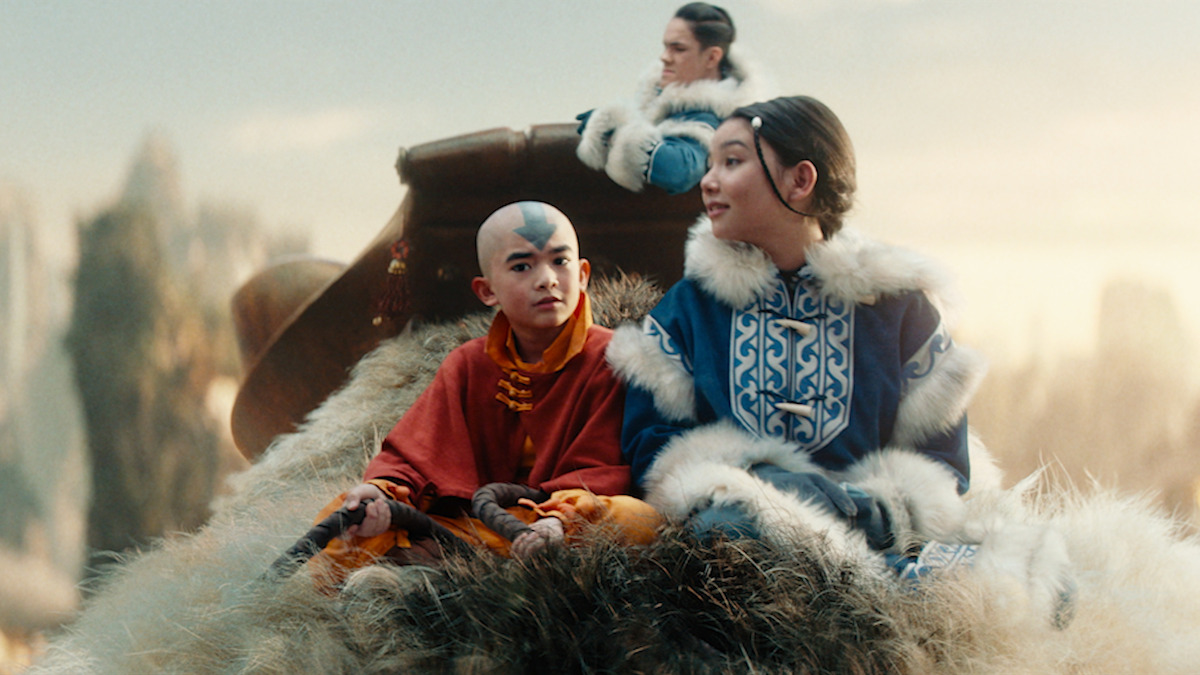
The most glaring issue upon finishing the season is the lack of identifiable bonding within Team Avatar. Appa is essentially a furry airplane, Momo appears in maybe 5 scenes. Rather than Aang helping Katara develop her bending, she gets her breakthrough from Jet. Sokka and Katara are not even with Aang when he meets King Bumi. While there’s reason within the show to preclude that, you can’t bond when you aren’t facing challenges together. Saving each other in a critical moment doesn’t always equate to good old-fashioned friendship.
It’s enough of an issue that Netflix stuffed so much into their time in Omashu. Having Katara go through the mountain tunnels without Aang, though, prevents a major plot point in the original from happening. With Aang being 12, it’s understandable that they don’t want to rush a romance with 14-year old Katara. However, to avoid their romance altogether is an insult to the animated show and to fans. By the time Katara gives her speech to Aang in the finale, it’s difficult to look back on their journey and conclude that they’ve become family, let alone great friends.
Making ATLA darker and more brooding was a disaster in Shyamalan’s film, and still presents problems for Netflix. In some ways, feeling darker has the opposite effect. Having Zuko fight his father rather than receive his scar on his knees is deflating. Firelord Ozai stands on the same level as his inferiors, fully visible, and it makes him less scary. The selective use of violent burns and executions are at times truly gut-wrenching (in a good way), but still somewhat implied and un-graphic.
We don’t get to see more than a minute or two of Aang being the carefree, fun-loving kid from the Nickelodeon show. Sure, it’s difficult to juxtapose the innocence of childhood fun with the responsibility of having to win/end a war. To paraphrase from writer Phoebe Waller-Bridge, ‘disarm them with comedy, and then punch them in the gut with drama.’ The darker moments and lonely revelations from Aang’s former selves would have carried far greater weight if we’d actually seen Aang act like a child, rather than just tell Appa he likes to do kid-things.
The original ATLA is one of the few shows that earned a perfect score on Rotten Tomatoes. When recreating something that good (and it is that good), maintaining the heart and soul of the original is paramount. Children’s media has the advantage of appealing to EVERYONE if done well. An increase in violence and darkness is useless if it’s not accompanied by a unified vision. ATLA often feels straddled between its dark tone and the constant presence of young kids struggling to grasp that darkness.
Many die-hard ATLA fans are likely to have a lot of complaints. Regardless, showrunner Albert Kim displays tremendous care and respect for the original. It was a gargantuan task to translate even one season of this animation to live-action. For newcomers interested in the concept of the show, this is likely an exhilarating and emotional watch. The pace is relentless, the action is stunning, and the acting is filled with passion. Now that the stage has been set, to abandon this effort would be a devastation akin to the 2010 film. The success in terms of viewer metrics remains to be seen, but the care and overall quality is undeniable.
I give Avatar: The Last Airbender a B+.
 TV and City