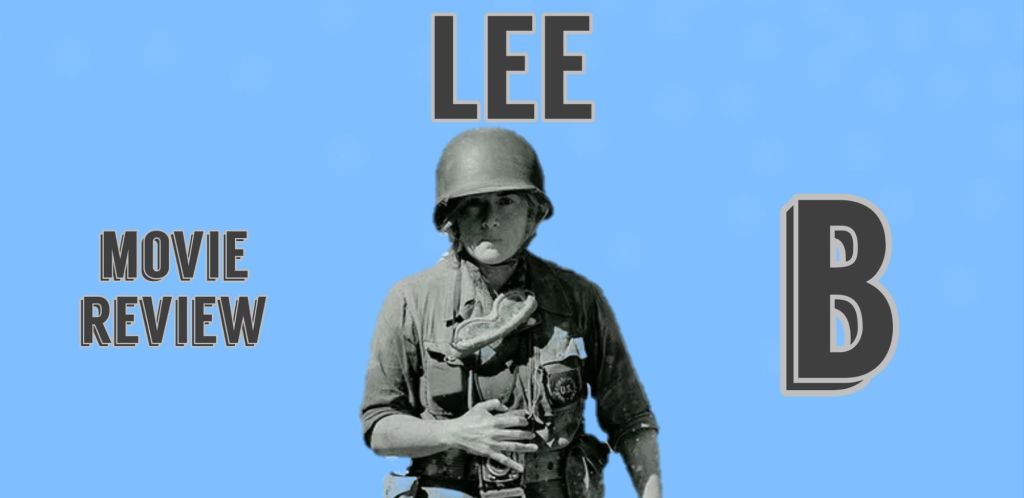
Lee snaps into theaters on September 27.
Lee is the kind of film that aims to transcend the usual biopic mold, yet despite its ambition, it often feels bound by convention. Directed by Ellen Kuras and starring Kate Winslet in the titular role, the film follows the life of Lee Miller, the iconic World War II photographer who captured the brutal realities of war in a way few others did.
Kate Winslet delivers a fierce and unflinching performance as Miller, transforming from a fashion model to a war correspondent with raw intensity. Winslet channels Miller’s contradictions—her strength and vulnerability—with such authenticity that you can’t help but be drawn into her internal conflict. Whether she’s documenting war on the frontlines or grappling with personal demons, Winslet’s portrayal feels deeply lived-in, making her performance one of the film’s strongest elements.
The film’s visual storytelling is another standout. Ellen Kuras, with her background as a cinematographer, brings a gritty realism to the depiction of war-torn Europe. The imagery is often haunting, mirroring the same stark, brutal beauty that Miller captured in her own photography. Kuras doesn’t shy away from showing the ugliness of war, making the film a fitting homage to Miller’s legacy as a trailblazer in her field.
Yet, where Lee falters is in its narrative. The screenplay struggles to balance the intricacies of Miller’s personal life with her professional achievements. While Winslet anchors the film, the story often feels uneven, attempting to cover too much ground without fully fleshing out Miller’s relationships or the emotional stakes of her journey.
And then there’s the film’s biggest surprise: Andy Samberg. Known primarily for his comedic roles, Samberg brings an unexpected and refreshing dynamic to the film. Though he appears in a more serious role, his presence injects levity into the heavier moments of the movie, offering some much-needed contrast to the darker themes. It’s a different side of Samberg, but he pulls it off with nuance, showing he’s capable of more than just laughs.
The supporting cast is rounded out by Jude Law and Marion Cotillard, though they often feel underutilized. Both give strong performances, but their characters serve more as satellites revolving around Miller’s gravitational pull rather than fully realized individuals. It’s a missed opportunity, especially given the talent on screen.
One of the more intriguing aspects of Lee is its exploration of the ethical dilemmas Miller faced. The film raises questions about the morality of documenting human suffering and whether art can exist within atrocity. These questions linger in the background, though they’re never fully explored, leaving the viewer to grapple with them long after the credits roll.
In the end, Lee is a film that succeeds on the strength of its visuals and Winslet’s powerhouse performance, but stumbles in delivering a cohesive, fully developed narrative. It’s a fascinating portrait of a woman who broke boundaries, but the film itself plays it safer than it should. Winslet and Samberg make it worth watching, but you may leave wishing the film had taken more risks.
I give Lee a B.

 TV and City