
By Elazar Abrahams
There’s something special about where we come from. Sometimes, we want to run from it, desperate for new experiences in unfamiliar places. Other times, we hold on tightly, finding safety in the familiar. Hometowns shape us in countless ways, and lately, I’ve been thinking a lot about the concept of hometown pride.
For me, as a born and raised New Yorker from Brooklyn, the idea of hometown pride is complicated. New York is my hometown, yes, but it’s also a global symbol, a destination for millions, a place so big that it feels like it belongs to everyone. For those city kids who grew up here, there’s an unmistakable pride in saying, “I’m from New York.” I wouldn’t trade that for anything. But when I listen to Noah Kahan singing about the small towns of Vermont, or watch Lady Bird’s complicated relationship with Sacramento, there’s almost a tinge of jealousy. The romanticization of small-town life, that deep-rooted connection to a singular place and community, feels like something residents of NYC don’t quite have. Hometown pride in New York is different. There’s an edge to it, a sense of survival, but there’s less of the wistful nostalgia that seems to flow so naturally from people tied to quieter places.
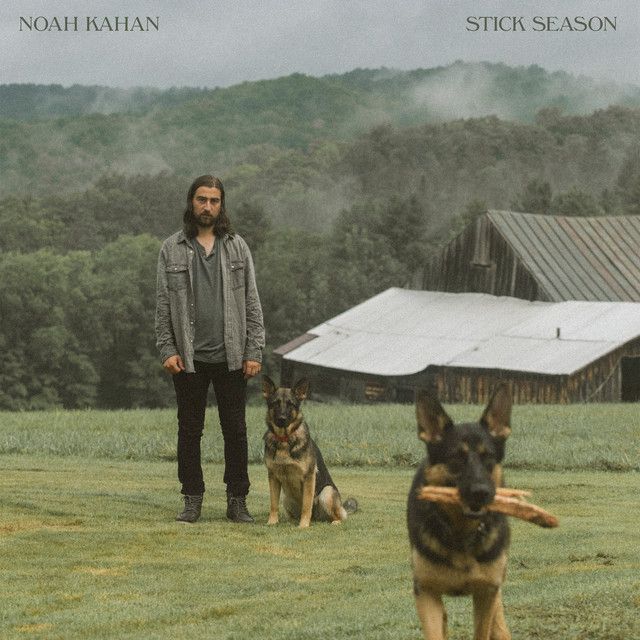
Take Noah Kahan, whose 2022 album Stick Season paints a picture of remote New England that’s far from idyllic. In the title track, he sings, “And I’ll dream each night of some version of you / That I might not have, but I did not lose,” reflecting the nostalgia for a place and people you feel slipping away but still love. In ‘Homesick,’ he riffs, “I’m homesick but I’m sick of home,” pointing to the push-pull dynamic of wanting to leave yet feeling tethered to the place that raised him. Kahan gives attention to the details of his hometown, from the people to the landscape, not to celebrate them, but to make sense of how deeply they shape him. The love he has for his home is honest, messy, and complicated. Even the album’s name refers to a miserable time of year when the landscape is gray and cold, foliage vanished, snow not yet fallen. There’s no neat resolution in his love for Vermont, and it’s as raw as the winters he grew up with.
Rewatching Greta Gerwig’s 2017 film Lady Bird, we again see this idea of attention as an act of love. The scene where Lady Bird’s relationship with her hometown is addressed most clearly is a conversation with Sister Sarah Joan, her catholic school’s college guidance counselor who is providing feedback on the young woman’s application essay. Lady Bird, longing to escape Sacramento, a city she is perhaps overly critical of, finds herself shocked when the nun points out how much she clearly loves her city. “You write about Sacramento so affectionately, and with such care,” the Sister notes. Lady Bird, confused, responds that she simply pays attention. “Don’t you think maybe they are the same thing? Love and attention?” the nun asks.

It’s a moment that hits harder once you realize that the very act of critiquing something often comes from a place of deep familiarity and care. Lady Bird has spent the entire film trying to get away from Sacramento, a place she finds stifling and small. But her desire to leave California is, in many ways, shaped by her deep-rooted connection to it. There’s an intimacy in how she talks about the city, even when she’s desperate to move away. The details she notices—the streets, the houses, the small-town feel—are born from years of close observation, and that’s a kind of love, even if she doesn’t call it that. Interestingly, the film ends with Lady Bird moving to New York City for college, her first chance at independence. In a way, her departure signals the same kind of tension explored by Kahan in his music: the pull to leave home, but with the knowledge that the place she comes from will always define her.
Once the theme of hometowns is on the brain, you begin to spot it everywhere, even in the most unexpected places. On Spotify shuffle the other day, a song from the 2020 Netflix comedy Eurovision Song Contest: The Story of Fire Saga came on. The track is called ‘Husavik (My Hometown),’ and it’s sung by the character of Sigrit. While Lady Bird grapples with wanting to leave her hometown, Sigrit is faced with the fear of being too attached to her roots. Played by Rachel McAdams, she has big dreams of winning Eurovision, but she’s constantly told that leaning too hard into her Icelandic heritage will hold her back. The climactic moment in the film comes when she defies these pressures, choosing to perform in Icelandic instead of English and sing an ode to her small town, Húsavík. It’s a performance of pure love for where she comes from. “Where the mountains sing through the screams of seagulls / Where the whales can live ’cause they’re gentle people,” she croons.
Growing up in New York is the greatest privilege. It comes with access to the greatest cultural institutions, history at your fingertips, centers of industry, and diversity that is unimaginable to those not from the area. Still, deep down, and as hard as it is to admit, I think many New Yorkers envy at least a small aspect of a true hometown experience. Don’t get the wrong idea, though; when it comes down to it, the energy of the city shaped us better than any middle America cornfield or Nordic island could.
 TV and City