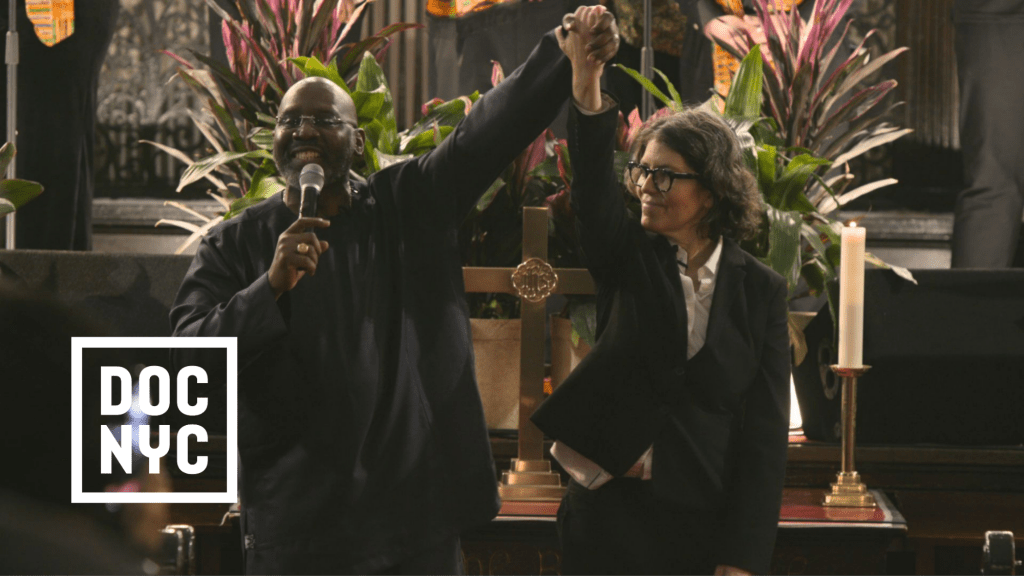
All God’s Children will have its world premiere at the 2024 DOC NYC festival tonight, Thursday, November 14, followed by an encore screening on Saturday, November 16.
By Elazar Abrahams
For decades, the Black and Jewish American communities have been natural allies. During the civil rights movement, leaders from both minority groups marched arm in arm together to fight for a more just world. The 2024 presidential election, just a few weeks ago, is another reminder of the partnership between the two worlds. Black voters and Jewish were among the only demographics to not shift politically rightward, unlike those polled from other ethnic backgrounds.
But on a grassroots level, the Jewish and Black coalition is faltering, with racism rearing its ugly head in certain Jewish enclaves, and antisemitism becoming commonplace in Black thought spaces. The new documentary All God’s Children offers a timely exploration of the interfaith collaboration between Bed-Stuy’s Antioch Baptist Church and Park Slope’s Congregation Beth Elohim, spending five years tracking the complexities of the two houses of worship trying to understand and break bread with one another.
The film is directed by Ondi Timoner, who, with her two Sundance Grand Jury wins, is no stranger to the documentary space. That is what makes the failures of All God’s Children so surprising. Perhaps some will walk away from the doc with renewed hope that everyone can get along despite any cultural differences, but if viewers really pay attention to the dynamics presented throughout the movie, nothing but frustration will be felt.
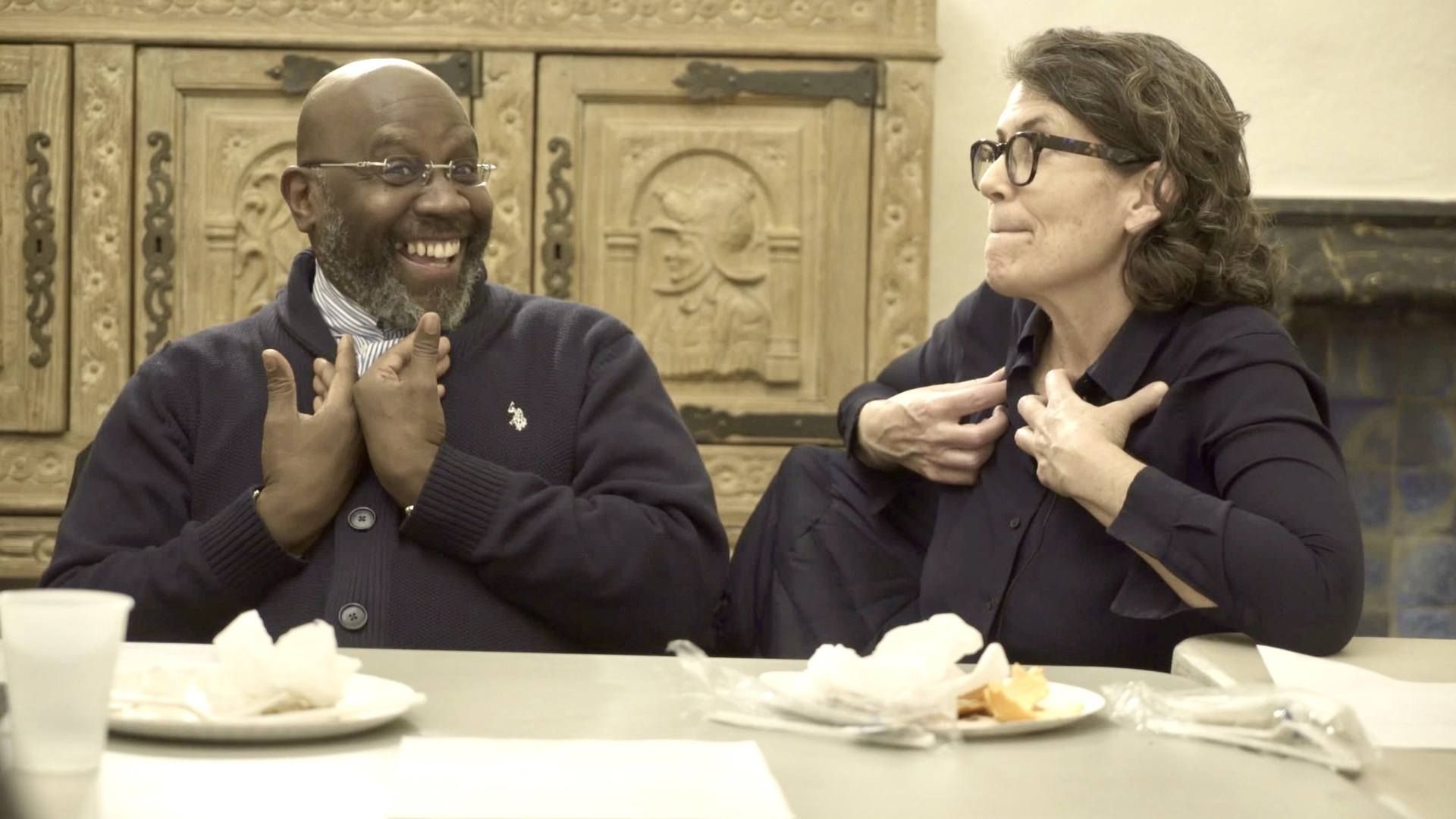
Rabbi Rachel Timoner (the director’s sister) and Reverend Dr. Robert Water are the two primary subjects here, and each come to the table with noble intentions. The leaders are trying their best to foster understanding between the two communities. However, it’s quite appalling to witness only one of these clergy members willing to bend over backwards to appease the other.
The churchgoers regularly tell the synagogue patrons that they hope they find and accept Jesus into their lives soon. After the Baptists take part in Beth Elohim’s Passover Seder, they extend an invite to the Jewish community to attend their yearly reenactment of the crucifixion of Christ. Surprise, that event features an actor playing a stereotypically evil Jew, complete with religious garb, cackling at the bloody death of Jesus. After an hour plus runtime of Rabbi Timoner biting her tongue so as to not rock the rickety boat the two communities have been sharing together, she finally confronts the Reverend in the most polite of fashions a few days after the service. Her valid concerns are dismissed as a “white woman” demanding things from a Black man. How dare she?
Of course, there is nuance here, and these are conversations that deserve to be had. But for such episodes to pass without proper interrogation whatsoever by the filmmakers is strange and off-putting.
There are a few such cases like this scattered throughout the film, highlighting the desire of the Jewish population to make peaceful inroads with their Brooklyn brothers, and their attempts being met with a lack of understanding as to the suffering the Jewish people have endured. This is to say nothing of the weird scapegoating of the Hasidic community that occurs early in the doc. Situated in neighborhoods like Crown Heights between the two spots focused on in the film, insular sects of ultra-Orthodox Jews are blamed by both the Black Christians and the more liberal Jews for the bad blood between the two communities. The Hasidim are accused of gentrifying Brooklyn with little pushback. Jews have been in southwest Brooklyn since the early 1900s. While Rabbi Timoner respectably points out that these visibly identifiable Jews face the brunt of antisemitic attacks and hate crimes, in other moments she may as well be saying, “don’t worry, my congregation aren’t ‘those’ kinds of Jews.” All that, just to be faced with partners who will not meet you halfway.
Timoner is good at using her camera to capture raw emotions, but it is shocking that she doesn’t lean into this discomfort more. All God’s Children has a lot of relevance and resonance in today’s social climate. Unfortunately, it might not be the kind that the film’s subjects intended to showcase.
Grab tickets to DOC NYC HERE.
 TV and City