
The Pitt aired its first season finale on April 10. The full season is streaming on Max.
By Greg Wheeler
After 15 intense episodes, The Pitt stands out as the best show of 2025 so far. It would take something truly extraordinary to change that, because HBO has delivered something exceptional.
Medical dramas usually fall into one of two categories. Some are stylized soap operas, often melodramatic, like the early seasons of Grey’s Anatomy, Chicago Med, or Korean series such as Dr. Romantic. Others aim for realism, including titles like ER, Code Black, or The Trauma Code. There are also comedic takes like Scrubs or the sharp, acerbic tone of House M.D. Given all of this variety, it is especially impressive that The Pitt not only succeeds, but elevates the genre with confidence and clarity.
While the show has earned praise for its realism—something echoed by medical professionals reacting to the series online—that is not the only reason it works. Blending the urgency of 24 with the emotional weight of ER and the procedural detail of The Trauma Code, The Pitt focuses on a bustling emergency room in a Pittsburgh hospital and all the chaos, drama, and personal struggles that unfold there.
The central figure is Robby, a senior ER doctor still grieving the loss of his mentor, Dr. Adamson, who died during the COVID-19 pandemic. Five years later, Robby continues to carry that pain with him, and the show treats his grief with thoughtful sensitivity.
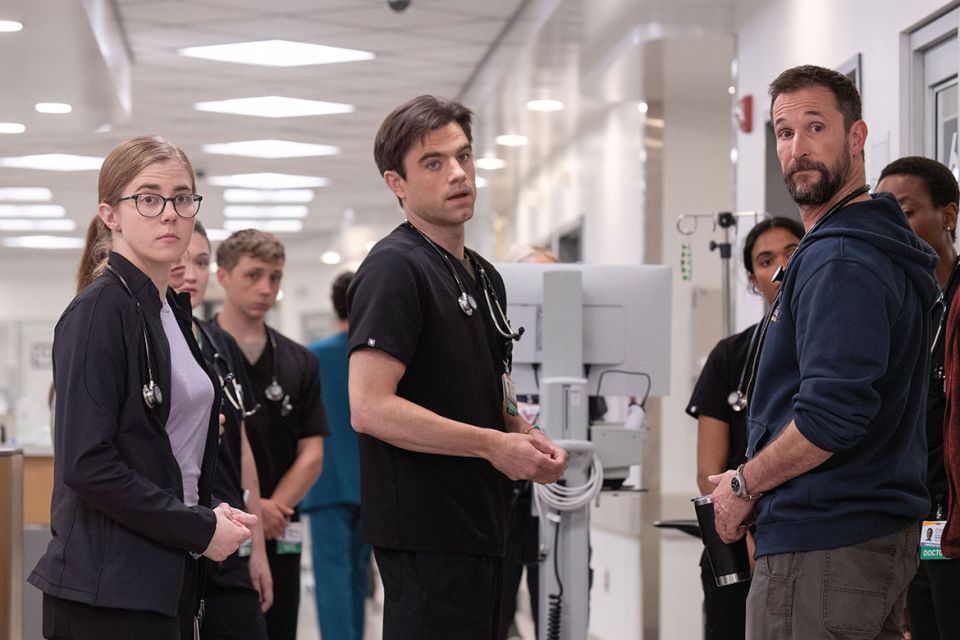
Despite this, Robby remains a strong leader, supported by charge nurse Dana Evans, who helps keep the ER running smoothly. Around them is a wide ensemble of characters, including overwhelmed new interns Whitaker, Javadi, and Santos, as well as Dr. Collins, who is hiding a pregnancy. These characters and others bring a range of personalities and storylines that contribute to the show’s emotional and narrative depth.
Each episode of The Pitt unfolds in real time, mimicking the structure made famous by 24. The doctors treat both long-term patients whose arcs span multiple episodes and more routine cases that are resolved quickly. This mix creates a rhythm that feels immediate and gripping while still allowing for long-term character development.
Some of the key storylines include a mystery involving tampered medication, Robby’s internal struggles, and Collins’ pregnancy. As the season progresses, a major tragedy overwhelms the hospital, putting everyone to the test. The pressure reveals both the strength and the vulnerability of the staff, pushing them in unexpected ways.
The show does not hold back when it comes to medical detail. Surgeries and procedures are shown up close, and the camera often lingers on graphic visuals. Viewers who are sensitive to blood and medical imagery should be prepared. The dialogue is similarly realistic, filled with medical jargon that adds to the authenticity. While there are moments where terminology is simplified, the writing generally respects the intelligence of its audience.
Production quality is consistently high. The makeup, costuming, and set design are outstanding, with small details—like bloodstains on the floor or increasingly disheveled appearances—creating a lived-in, immersive world. These touches make the hospital feel like a real workplace rather than a polished TV set.
The acting is another major strength. Noah Wyle delivers a powerful, award-worthy performance as Robby. He brings both authority and emotional depth to the role. Patrick Ball also stands out as Dr. Langdon, which is particularly impressive considering he only had a single Law & Order episode under his belt before this. His performance suggests a promising future.
If there is one weakness in the season, it is the early depiction of Dr. Santos. For much of the show, she falls into the familiar trope of the overly confident, emotionally detached female lead. She comes across as one-dimensional at first, but the writing improves her arc as the season continues. By the finale, she becomes a more well-rounded and sympathetic character. Even so, it is disappointing to see such a dated character type appear in an otherwise fresh and thoughtful series.
Despite that flaw, The Pitt is an outstanding achievement. The writing is sharp, the characters feel real, and the show’s constant sense of urgency makes it incredibly watchable. Anyone who enjoys character-driven dramas or medical procedurals should add this to their list. It is not only a standout of the year but a new benchmark for medical television.
I give The Pitt an A.
 TV and City