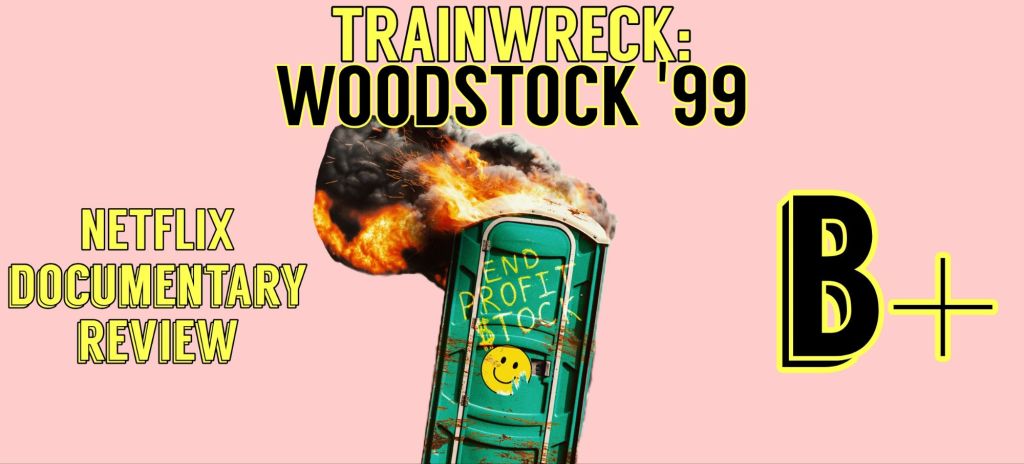
It’s Netflix’s “summer of disaster,” with the streamer rolling out a new documentary each week under the Trainwreck anthology banner. Each of the eight films revisits a real-life event that spiraled out of control, from music festival tragedies to viral hoaxes and reality TV fiascos. These stories dominated headlines at the time, and now each of the installments give the ugly tales a deeper dive. At TV and City, we’re covering them all.
While the eight installments might be over now, there was another disaster that laid the groundwork for the whole Trainwreck franchise, one so chaotic it demanded its own three-part docuseries. Trainwreck: Woodstock ’99, released in 2022, is the spiritual origin point of this Netflix anthology. Now that we’ve made it this far through the summer, the logical capstone of this column was going back to watch where it all began.
Trainwreck: Woodstock ’99 is streaming on Netflix.
By Elazar Abrahams
Woodstock ’99 was conceived as a reboot of the peace-and-love ethos of the original 1969 festival. But instead of green fields and flower crowns, organizers opted for a baking-hot airstrip in Rome, New York, paved with tarmac, surrounded by fences, and packed with overpriced vendors. The crowd was mostly young, mostly male, and increasingly frustrated. Over three days, the festival devolved into something closer to a riot, a boiling mix of heatstroke, bad sanitation, corporate greed, and nu-metal aggression that ended with fires, looting, and near-total collapse.
The doc smartly alternates between the chaos on the ground and the cluelessness in the planning rooms. Co-founder Michael Lang and fellow promoter John Scher come off as profoundly out of touch, misreading the mood of an entire generation. Their attempts to blame the music, the media, and even movies like Fight Club and American Pie are treated with the side-eye they deserve. Never mind the collapsing infrastructure or $4 water bottles. Apparently, it was Fred Durst’s fault for singing “Break Stuff.”
To its credit, the documentary doesn’t just point fingers at the artists. It paints a damning picture of the conditions: broken water lines, boiling temperatures, overflowing garbage, and no shade or free hydration. The doc even catches the irony of organizers handing out candles right before the Red Hot Chili Peppers played a cover of “Fire.” What happened next was all but inevitable.
For viewers used to slick, single-serving Trainwreck docs like Mayor of Mayhem or Balloon Boy, Woodstock ’99 feels like a different beast. It’s longer, deeper, and angrier. It’s still got some of that true-crime sheen, but there’s a more biting thesis underneath about the commercialization of counterculture, the rise of corporate festival culture, and the widening gap between the people on stage and the people sweating in the crowd.
The biggest takeaway? When you combine corporate greed with poor planning, a fed-up audience, and summer heat, it’s not peace and love you get. It’s “Profitstock.” And as Netflix’s proto-Trainwreck, this one still stands as the most essential of the bunch.
I give Trainwreck: Woodstock ‘99 a B+.

 TV and City