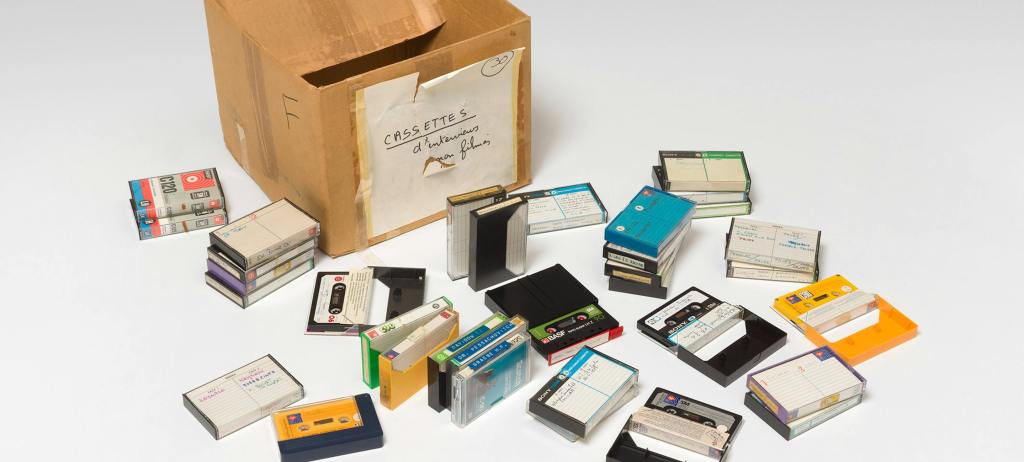
The Recordings: Voices from the Shoah Tapes is on view at The New York Historical through March 29.
By Elazar Abrahams
Most museum experiences are built around spectacle, taking visitors through winding galleries decked with relevant art and artifacts. Not so for the latest exhibit at New York Historical on Manhattan’s Upper West Side.
The Recordings: Voices from the Shoah Tapes is a compact audio installation that takes up a single room in the museum’s ground floor. It is comprised of a database from the recordings taken by filmmaker Claude Lanzmann while preparing his landmark documentary Shoah. It’s not a lengthy space to wander through. You can take a seat, select a survivor’s name, and put on the headphones to hear their testimony.
I attended a morning press preview, so I can’t speak to the usual vibe with crowds, but the intimacy of the setup feels intentional. This is not about milling around and snapping photos for an Instagram story; It’s about listening.
And listening is the point. In a culture that is constantly feeding us images, this experience strips most of the visuals away and forces you to engage with voices. You spend time with raw testimony. You sit in a room and let the words land. It denies the visitor the easy distance that sometimes comes from watching history through a screen or scanning wall text on the move.
I don’t think it’s the kind of exhibit that is worth visiting the museum for on its own, the way some can be. But I am very glad NY Historical is housing it. This museum is one of my favorites in the city, and it’s worth a trip regardless. This display fits there, especially alongside the institution’s emphasis on New York’s diversity and the many communities that make the city what it is.
More importantly, this exhibit matters now. Antisemitism in New York is scarily high, and the public conversation around the Holocaust has become disturbing in ways that would have seemed unthinkable not long ago. Scroll through the comments on almost any social media post that mentions the Holocaust and you’ll see it immediately, not just ignorance, but outright denial. It’s one of the reasons why an experience like this, built around firsthand voices, feels so necessary.
As someone with a grandparent who is a Holocaust survivor, I went into this expecting to be moved by survivor testimony and of course I was. Hearing survivors speak in their own words is always sobering. There’s a particular kind of emotional clarity that comes from testimony that hasn’t been turned into narration, or packaged into a tidy storyline. It’s just a human voice insisting on what they went through.
But the most memorable part of this installation for me was something I did not expect: it also includes testimony from Nazi guards. It doesn’t sound like the theatrical villain monologue you might imagine in your head. It highlights what Hannah Arendt famously called the “banality of evil,” the way atrocity can be carried out by people who speak casually, bureaucratically, even mundanely about what they did.
 TV and City