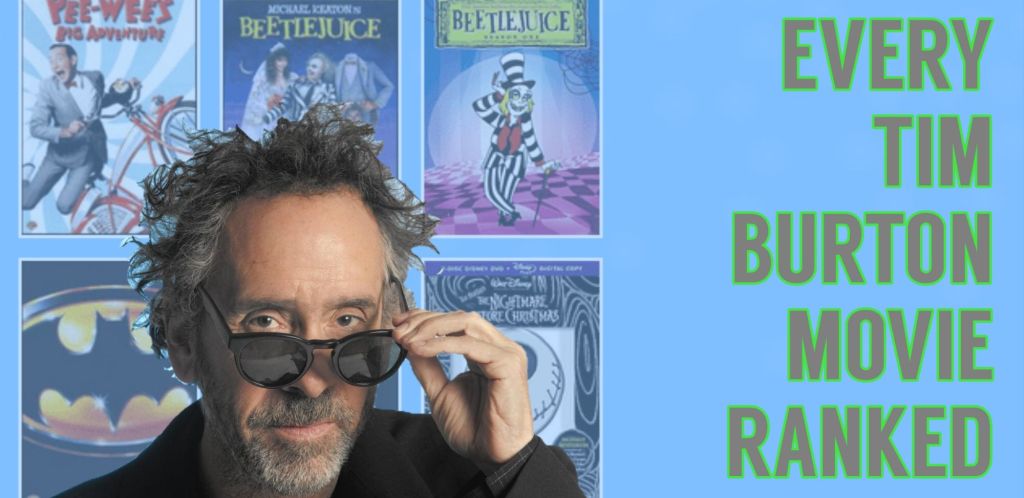
By DC Bolling
A visionary filmmaker, Tim Burton has significantly influenced modern cinema with his distinctive style. His darkly whimsical worlds, the portrayal of misunderstood characters, and deep affection for the macabre have left a mark in Hollywood. His 40-year career, which began with Disney firing him after his shorts were deemed too scary for kids, is a testament to his resilience and creativity. That didn’t stop him since he’s gone from having a distinct voice for gothic fantasies to shining a new light in the superhero genre that has become beloved favorites decades later.
His films are instantly recognizable by their distinctive aesthetic, often blending the eerie with the enchanting. Regardless of budget, you know right away it’s one of his films when it involves his most frequent collaborations with actors like Johnny Depp, his ex-partner Helena Bonham Carter, composer Danny Elfman, and costume designer Colleen Atwood, to name a few. And to think he almost made a Superman movie with Nicolas Cage as the Man of Steel and Kevin Smith was hired to pen the script. Since the 2000s, not every project he tackles has been a critical hit, and his modern films seem as though they’re all the same. Still, not counting his weaker efforts, there’s no denying his creativity breathes life into anything he does, from animation to live-action. The only movie most would expect to be on this list but isn’t is The Nightmare Before Christmas since he only produced and conceived the story.
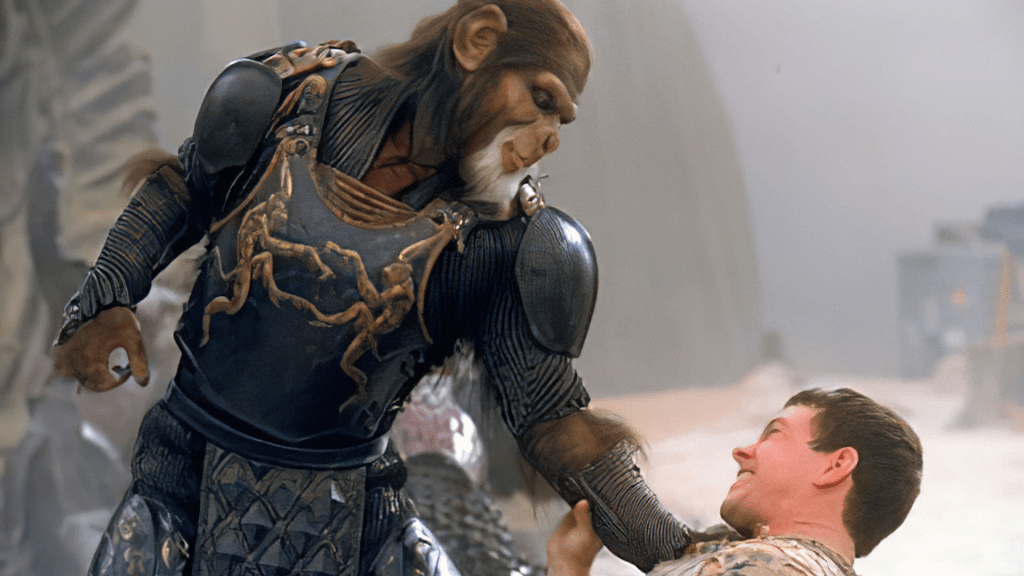
20) Planet of the Apes
Release Date: July 27, 2001
Budget: $100 million
Domestic Box Office: $180 million/ Worldwide: $262.1 million
RT Score: 44%
Truthfully, it wasn’t the craziest idea for Fox to do a big-budget remake of Planet of the Apes. Sure, anyone who grew up watching the groundbreaking science fiction original starring Charlton Heston knew this wouldn’t even compare. But with Burton’s involvement, there had to be high hopes for a somewhat solid update for a new generation. And yet, stepping away from his usual gothic approach, it was a major disappointment for the summer of ’01, to where if I saw this in theaters when I was five, I would’ve asked my parents to leave halfway through. Mark Wahlberg stars as Leo Davidson, a United States Air Force astronaut who crash-lands on Ashlar, a planet inhabited by apes, and the humans are their slaves.
There are some takeaways from Planet of the Apes that don’t make this the worst movie ever: Tim Roth’s committed performance as the human-hating General Thade is the kind of chewing-the-scenery acting where he knows he has to play this character as straight as possible. Even when he’s working on bad movies, Rick Baker’s makeup work makes the audience believe these actors are talking apes, which is an achievement. Besides that, this lacks tremendous personality, with an ingenious story and convoluted commentary creating a dull sense of urgency and peril throughout two hours. The human characters have no engaging qualities, and Wahlberg delivers one of his blandest lead roles, which seems miscast. And the less said about Estella Warren, the better. But just when it couldn’t get worse, nothing is more head-scratching than the stupid twist ending that’s the complete opposite of the original’s shocking twist to finish them all. Whether it was studio interference or not, it’s more laughablely bad than anything else. Thankfully, Hollywood learned its lesson a decade later with the well-received reboot Rise of the Planet of the Apes and its following sequels.
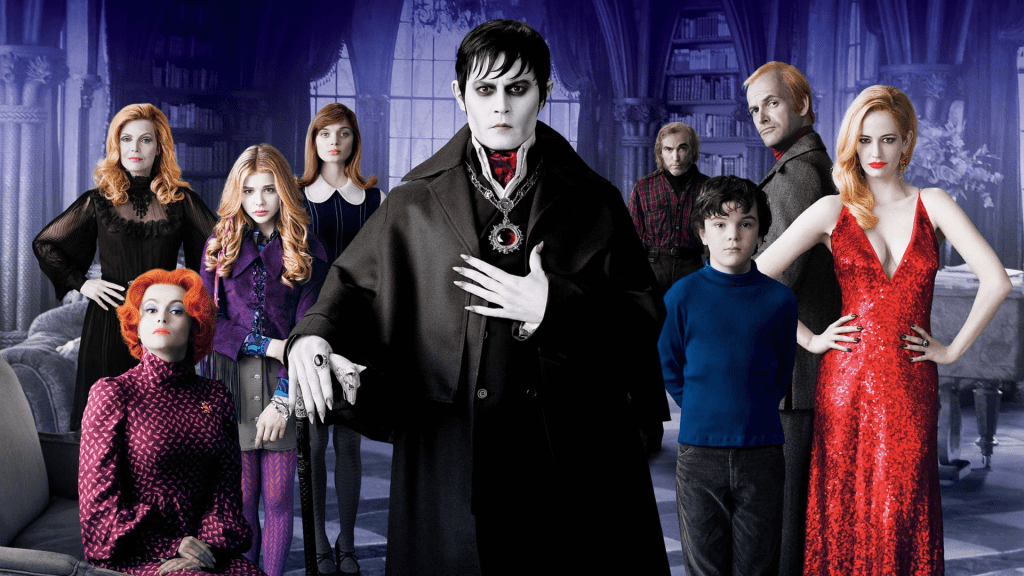
19) Dark Shadows
Release Date: May 11, 2012
Budget: $150 million
Domestic Box Office: $79.7 million/ Worldwide: $245.5 million
RT Score: 35%
Before Dark Shadows was the latest and, to date the last collaboration with Burton and star Johnny Depp, this 2012 film is based on the gothic soap opera from the 1960s my mom used to watch when she was a kid. Burton hasn’t had a critical hit in years, so a vampire comedy looks serviceable enough without watching the series. Depp plays Barnabas Collins, an 18th-century aristocrat cursed to be a vampire by the witch Angelique (Eva Green) and buried and locked alive in a coffin by the residents of Collinwood. Awaken from his tomb in 1972, Barnabas finds himself in the modern world where his descendants live at his estate, which isn’t what it used to be.
Those familiar with the property lens itself well in some parts, but similar to other popular television series turned into movies, it failed to reach a new audience. It can’t capture enough to leave those satisfied. Not even the biggest fans of the director don’t know what it wanted to be when the trailer was out. Unfortunately, it wasn’t shocking to watch Depp playing a weird character, and it wouldn’t be the last. His performance as Barabus Collins being the fish-out-of-water vampire in the ’70s culture is an amusing angle to work off of. The bad thing is he and the rest of the underdeveloped cast, including Michelle Pfeiffer and an over-the-top Eva Green, have no real purpose to root for them. The movie does a poor job of making a good excuse to exist. The tone hits in different places–an unfunny comedy with meddled ‘70s references to moments of darkness like Barnabus killing a bunch of stoned hippies or construction workers to feed. It is confusing what Burton and writer Seth-Graeme Smith tried to convey. But like most of his movies, I can give positives to the art direction and the soundtrack of hits. They thought Dark Shadows was a good idea to reboot because the team liked it, but we didn’t because it’s lifeless, culminating in the worst collaboration between the director and star by far. The biggest mistake was releasing it the weekend after The Avengers dominated every box office record.
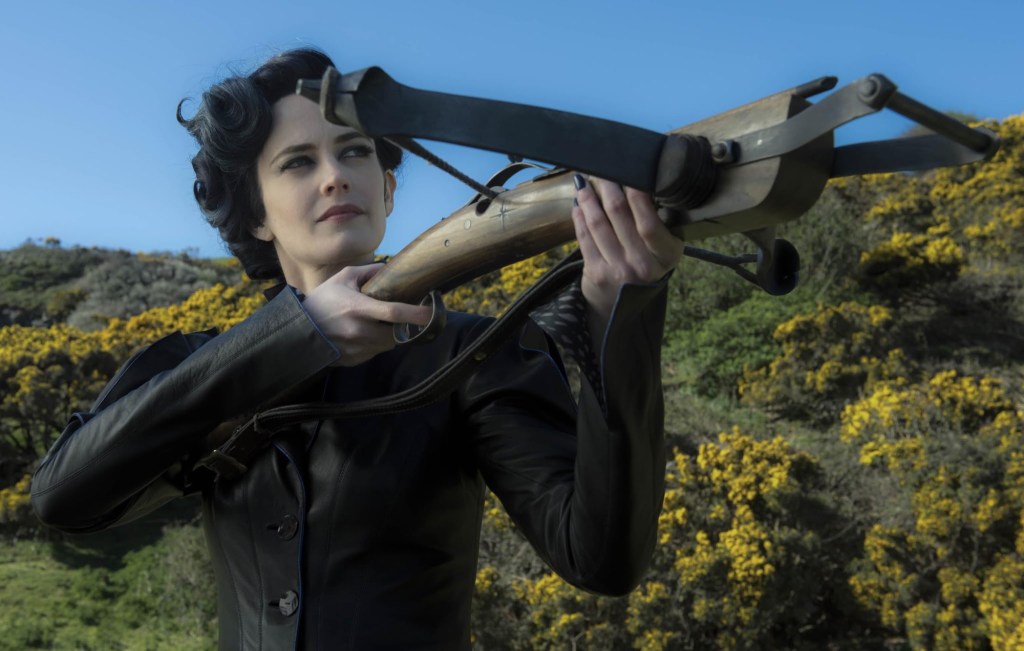
18) Miss Peregrine’s Home for Peculiar Children
Release Date: September 30, 2016
Budget: $110 million
Domestic Box Office: $87.2 million/ Worldwide: $296.5 million
RT Score: 64%
Of all the movies Burton directed in the 21st century, Miss Peregrine’s Home for Peculiar Children is one I barely remember having seen once shortly after it came out. All I knew was it didn’t feel right with me when everyone could look at it and say it was his version of X-Men. And they’re correct after watching it again years later. For good reason, he could not pursue a possible franchise based on Ransom Riggs’ novels. Jake Portman (Asa Butterfield) travels to an island off the coast of Wales, where his grandfather tells him about a school for children with gifted powers. Once he is transported through this loop, he realizes it’s all true, as they’re stuck in a loop in 1943.
On paper, Miss Peregrine seemed to be a promising project, blending Tim Burton’s usual flair with the storytelling skills of frequent Matthew Vaughn collaborator Jane Goldman. With a talented cast, including Eva Green as the titular headmistress and Ella Purnell, and a decent score from Mike Higham and Matthew Margeson, the movie had all the makings of a Burton classic. However, it’s hard not to feel dissatisfied, as if Burton might have lost his way halfway through filming. I haven’t read the novel, but it suffers from most young adult adaptations where the visual style can be appealing, but it lacks any investment in any of the characters and basically pours on exposition from one scene to the next. Butterfield’s Jake makes for a dull protagonist (not in fault of his performance), knowing he’ll eventually be brave and discover his peculiar ability to stop a forgettable threat for good. I checked out myself near the finishing line when it got confusing involving time loops. On the plus side, it gave us a great Florence + The Machine song, “Wish That You Were Here.”
17) Dumbo
Release Date: March 29, 2019
Budget: $170 million
Domestic Box Office: $114.8 million/ Worldwide: $353.3 million
RT Score: 46%
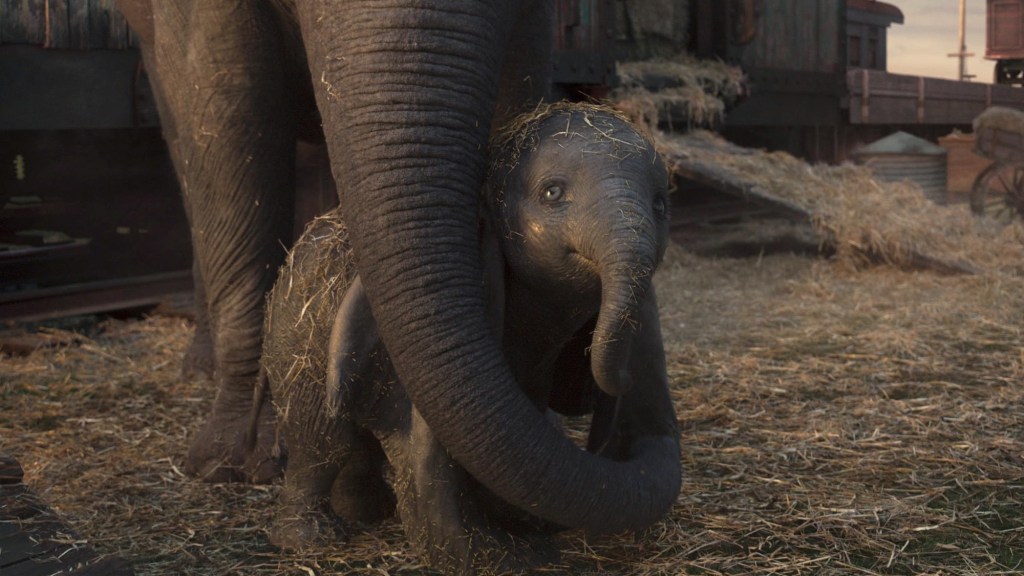
Dumbo was the first of several live-action Disney adaptations released in 2019 that proved they had gone out of hand and be nothing but cash grabs (only one was semi-decent). This is one of them without question. The most obvious question is, why remake what everyone loved from childhood? As we eventually learned, Burton’s second time remaking a studio classic definitely falls short of being imaginative, or one people will remember fondly. The film’s lack of memorable impact leaves it insignificant. A family working at a struggling traveling circus takes care of a baby elephant with oversized ears after his mother is sold.
Once was enough to watch this again, and I can remember five years later that this probably wasn’t what everyone hoped for. The disappointment breathing from Dumbo is how it needs to expand on the 1941 story that didn’t need more padding, leading not to feel cinematic for this translation. Dumbo is cute for a CGI animal, but none of the human characters are essential despite the talents of Colin Farrell and Danny DeVito on screen and feeling as though the title character is an afterthought in his own movie. It tries to not be a complete copy of the first, meaning there were no stereotyped crows to be found. What’s better than watching this again is popping a gummy and listening to Tame Impala’s “Elephant” while watching the pink elephant sequence from its animated counterpart.
Full Review—> RIGHT HERE
16) Charlie and the Chocolate Factory
Release Date: July 15, 2005
Budget: $150 million
Domestic Box Office: $206.4 million/ Worldwide: $475 million
RT Score: 83%
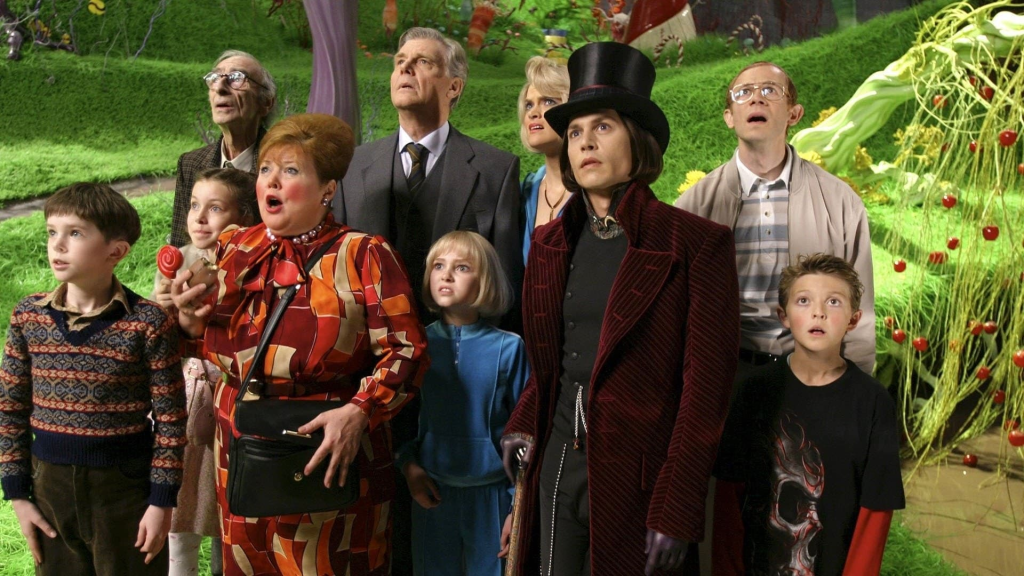
Nothing compares to 1971’s Willy Wonka and the Chocolate Factory and what the late Gene Wilder brought to the eccentric character. Was anyone asking for a remake? No. However, many believed Burton had something up his sleeves to make his reimagining of the classic Roald Dahl book his own. Even when I saw this in theaters when I was nine, Charlie and the Chocolate Factory is another example of an early 2000s remake courtesy of a filmmaker who couldn’t find that needed excitement. Here, we have Charlie Bucket (Freddie Highmore), a poor boy who gets the opportunity of a lifetime when he’s one of five children who finds a golden ticket inside a candy bar to tour Willy Wonka’s chocolate factory.
Highmore’s performance as Charlie provides the film’s much-needed heart and optimism, along with the late David Kelly as Grandpa Joe. Though there’s enough visual eye-candy through the production design to make the factory come to life thanks to Alex McDowell, it all goes downhill once the children and their parents step inside, being toured by one of Johnny Depp’s worst performances. Everything is off about his portrayal of the chocolatier when he appears more so as creepy and unlikably childish, especially when it seems he’s going for Michael Jackson than anyone else. The experience, with its dark, whimsical tone, doesn’t fit with unlikable supporting characters and an absence of fun. What’s worse was this thinking that we care about his backstory and his suppressed memories of his father when we don’t, causing a disconnect in caring for Willy and Charlie’s absent relationship. It’s also strange seeing how Depp and Highmore previously worked together in Finding Neverland the year prior and were better from that. None of the imaginative spirit is replicated in Charlie and the Chocolate Factory, resulting in a frustrating family film that missed the point of what made the original a favorite.
15) Alice in Wonderland
Release Date: March 5, 2010
Budget: $200 million
Domestic Box Office: $334.1 million/ Worldwide: $1.025 billion
RT Score: 51%
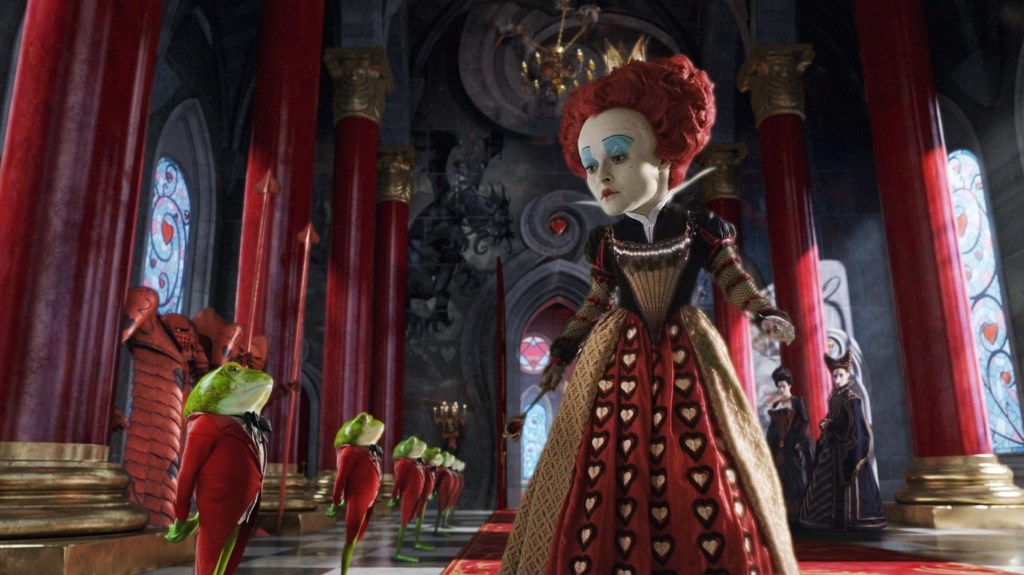
Suppose there’s one movie that pinpoints how it started with Disney remaking its animated classics into live-action, for better or worse. In that case, it’s all thanks to this 2010 reimagining of Alice in Wonderland. In theory, it sounded ideal for Burton to put a spin on Lewis Carroll’s fairytale and attempt to bring one of the company’s most colorful films to life. Yet, as huge of a blockbuster as this was (the second highest-grossing film of 2010), the downfall of his career at the start of the decade started here, unfortunately. More of a continuation of the original story than a remake, a grown-up Alice Kingsleigh (Mia Wasikowska) falls down the rabbit hole and finds herself back in “Underland,” only to think she’s dreaming. With the help of the Mad Hatter (Johnny Depp), she must fulfill the prophecy of slaying the Jabberwocky and taking the Red Queen (Helena Bonham Carter) off her throne once she has taken control of the world.
I mostly enjoyed it as a teenager but found it mediocre a decade later. Alice in Wonderland asks us why Burton decided to remake a well-established film that didn’t work in his favor. Some positives include admiring the underrated Wasikowska for trying her best to make Alice a likable protagonist and the costume design from Collen Atwood (winning a deserved Oscar more than Art Direction). But it has this void of whimsy that comes with any Carroll translation. Getting wrapped up in Wonderland is lost with the overwhelming amount of CGI that makes the film look dull rather than spectacular, even in 3D. This is when I started getting annoyed with Depp playing characters with white face paint, which is needed to scale back on the Mad Hatter. Though Alice in Wonderland might please younger viewers, this adaptation lost the charm to make it watchable. At least it has Avril Lavgine’s song and is better than its 2016 sequel, Alice Through the Looking Glass, which was the opposite in pulling in box office numbers. Enough hating on the Beauty and the Beast remake when this exists.
14) Mars Attacks!
Release Date: December 13, 1996
Budget: $80 million
Domestic Box Office: $37.8 million/ Worldwide: $101.4 million
RT Score: 56%
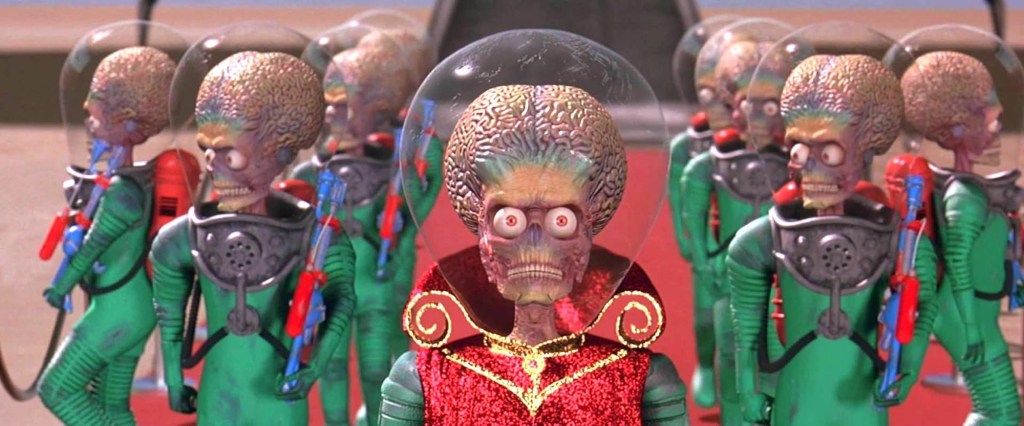
In the same year we got the mega-blockbuster Independence Day, Burton made a very different alien invasion film with Mars Attacks! Some considered it his first miss. Based on the ‘60s Topps trading card series, the film shows the people of Earth being visited by Martians who come from Mars once flying saucers are discovered. When they come to make peace with the humans, hopefully, they attack everyone, leading to a war on the planet nobody is prepared for.
Out of all his films, Mars Attacks! has one hell of a stacked cast, including Jack Nicholson (who plays two different roles ala Peter Sellers in Dr. Strangelove), Glenn Close, Annette Bening, Pierce Brosnan, Martin Short, Michael J. Fox, Jim Brown, and even singer Tom Jones. On the surface, you can tell instantly that Burton and company attempted to make this sci-fi comedy tongue-in-cheek to the highest degree to make a movie straight out of the ‘50s. Still, something about it doesn’t seem to hit all the right notes with its tones. Perhaps the funniest moment was one of the Martian’s ships leaning over the Washington Monument. It can be enjoyable as a satire of any B-movie. But it slips up on the comedy when it can sometimes be disturbing (Sarah Jessica Parker’s head replaced by her chihuahua). When you look at his ensemble, it’s a shame that not only do most of the characters strangely come off as bland to care about during the first half, but some often feel wasted by their screen time. The Martians themselves are nothing but bizarre Looney Tunes cartoons, but they’re almost more annoying than threatening as the story continues repeatedly. With Mars Attacks!, it’s easy to see how it gained a cult following. But when it tries to be fun, it’s nothing more than frustrating why it couldn’t be better.
13) Corpse Bride
Release Date: September 16, 2005
Budget: $40 million
Domestic Box Office: $53.4 million/ Worldwide: $118.1 million
RT Score: 84%
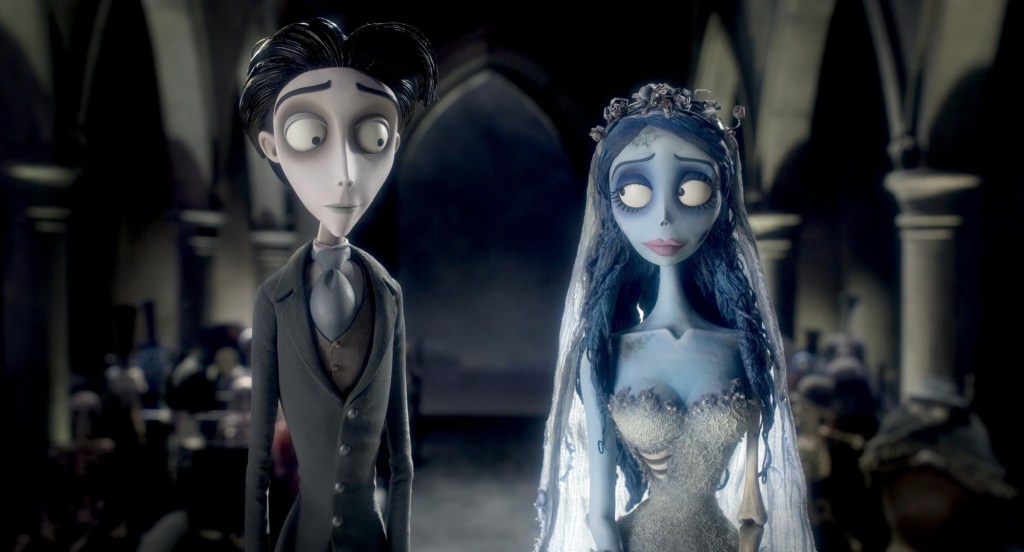
Those looking for anything family-related to turn on during the Halloween season should seek Burton’s second feature film from 2005, the stop-motion macabre fantasy Corpse Bride, co-directed by Mike Johnson and the first animated film with Laika’s name attached. Set in the Victorian era, Victor (voiced by Johnny Depp) is nervous about his arranged marriage to Victoria (voiced by Emily Watson). A stressful and embarrassing rehearsal led him to run off into the forest, where he could recite his vows to a root, only to discover it’s the hand of an undead woman named Emily (voiced by Heleana Bohtom Carter) who believes she’s married to the living Victor.
It’s surprising how I missed this in theaters when I was a kid and caught it for the first time recently; the craftsmanship to bring this world to life is undeniable for a strange romance brimming based on a Jewish folktale. The striking difference is that everything in Victor’s world of living is gloomy, and Emily’s is more colorful and extravagant in the land of the dead. And with the typical mainstays in Depp and Bonham Carter, they lend their voices well to Victor and Emily, respectively. The story could be more memorable despite having a short runtime and revolving around a love triangle. Going in, I didn’t know it was also a musical, and this could’ve worked without being one since the original songs from Danny Elfman didn’t have me wanting to listen to them again after it was over. Yet, I can see this being turned into a Broadway musical. If you ever need to catch a film that has comedy, horror, and romance, Corpse Bride is worth the shot. It earned an Academy Award nomination for Best Animated Feature but lost to DreamWorks/ Aardmin’s Wallace & Gromit: The Curse of the Were-Rabbit.
12) Sleepy Hollow
Release Date: November 19, 1999
Budget: $70-100 million
Domestic Box Office: $101.1 million/Worldwide: $206.1 million
RT Score: 70%
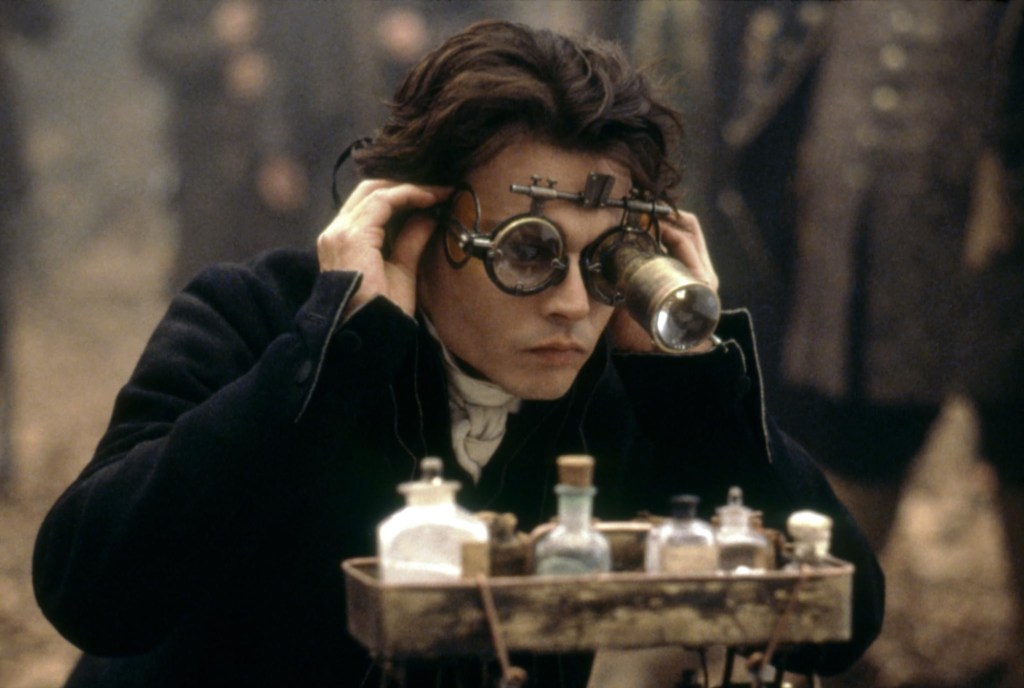
Burton capped off the ‘90s decade with a $70 million R-rated loose adaptation of Washington Irving’s well-known short story that could’ve been too out of left field to find entertaining. Instead, leave it to him and Se7en scribe Andrew Kevin Walker to make Sleepy Hollow rely on its perfect atmosphere to reel you in. New York police constable Ichabod Crane (Johnny Depp) is dispatched to the village of Sleepy Hollow to investigate a series of murders by the mysterious Headless Horseman (Ray Park/ Christopher Walken), decapitating the heads of its victims. At first skeptical, Crane suspects these murders might be connected.
Having never read the original story, even I can tell some changes will work for those who have watched Disney’s version as a child. That’s not to say Sleepy Hollow isn’t one of his best films, but despite questioning what it wanted to be, something is appealing about it when it combines a period horror and a mystery. Burton has an eye for the genre and is taking a stab at Irving’s tale with a few twists. Depp could’ve made this version of Crane one-note, but he made the character fun and frightful once he witnessed the Horseman with his own eyes. There’s also Christina Ricci, a surprising turn from Christopher Walken, and two late Harry Potter alums, Michael Gambon and Richard Griffiths. Sleepy Hollow is also one of the most stylish films he’s done to create this bleak setting through each frame, with Emmanuel Lubezki’s cinematography and the Oscar-winning set design that must’ve taken a lot of hard work to build. The story can become complicated in the middle, and the third act almost stumbles by over-explaining the inevitable twist. That said, even when it’s not perfect, it’s a swing I can appreciate.
11) Beetlejuice Beetlejuice
Release Date: September 6, 2024
Budget: $100 million
Domestic Box Office: $110 million/ Worldwide: $145.4 million (as of 9/8/2024)
RT Score: 76% (as of 9/8/2024)
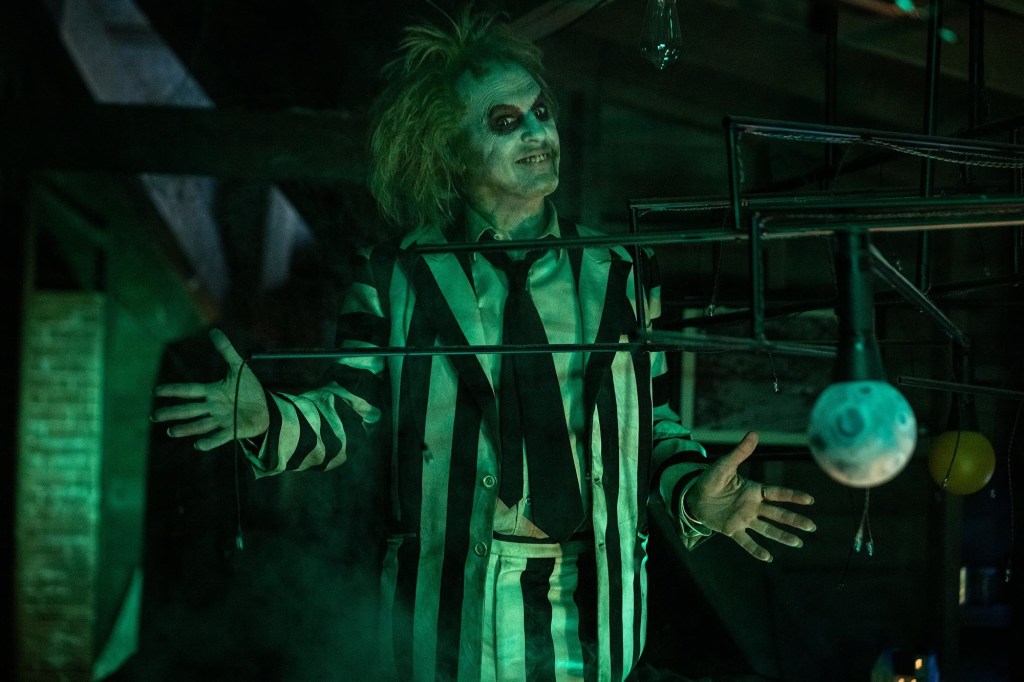
Years have passed without Burton directing a film, and having timid thoughts about Beetlejuice Beetlejuice might be reasonable since this could’ve been a pointless cash grab. For me, it’s a worthwhile sequel to watch back-to-back with the 1988 original. Since we last saw the Deetz family, Lydia (Winona Ryder) returns to Winter River with her estranged daughter Astrid (Jenna Ortega) and stepmom Delia (Catherine O’Hara) after her father’s death. Yet, in the afterlife, good ol’ Betelgeuse (Michael Keaton) might’ve found a way to escape into the land of the living.
Pretty much anything fans liked about the original is brought over, which might be enough for those wanting Burton to return to the nostalgic style he’s best known for. Michael Keaton has retained his touch as the Ghost with the Most, having a blast doing the classic black-and-white striped suit and getting into mischief. It also gives us a decent amount of heart with Ryder and Ortega’s roles. Not everything has to be questioned when delving back into this world; those who do will take this seriously when they shouldn’t. Besides relying on the charm of its main character, the hard work on the practical effect throughout shouldn’t be ignored. While it doesn’t match the first when this can suffer from a convoluted plot that made a few characters feel unnecessary, I honestly think I’ll like Beetlejuice Beetlejuice more than most.
Full Review—> RIGHT HERE
10) Big Eyes
Release Date: December 25, 2014
Budget: $10 million
Domestic Box Office: $14.5 million/ Worldwide: $29.3 million
RT Score: 72%
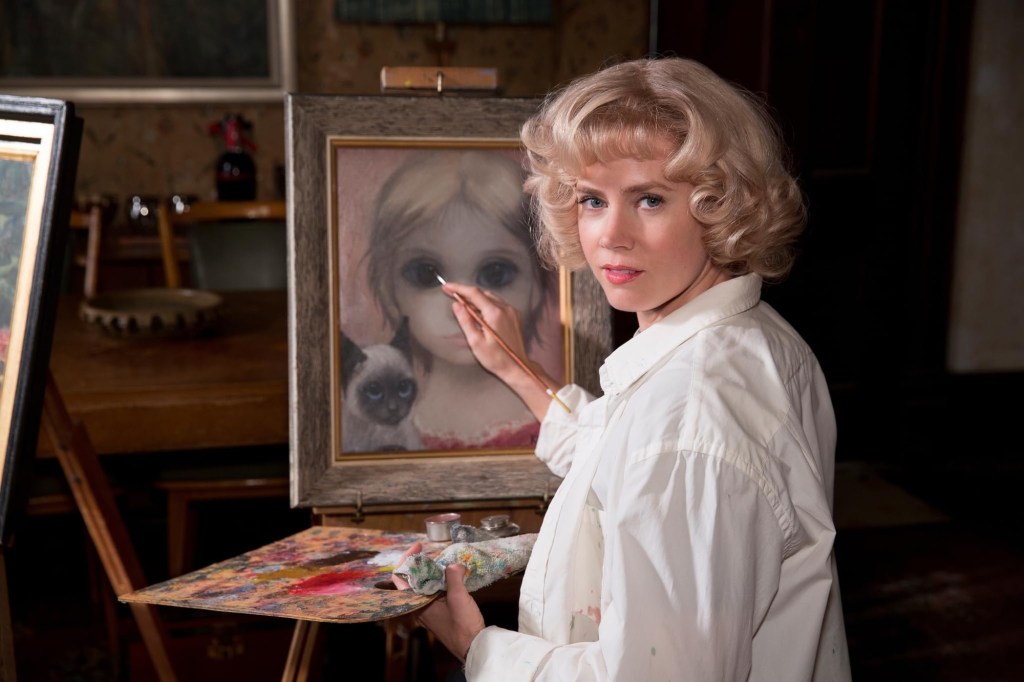
Whenever Burton does a biopic on an artist, it’s considered a breath of fresh air to push aside the usual creepy and weird style he brings forth. At first glance, you wouldn’t think he was behind 2014’s Big Eyes, but seeing this as one of his better efforts in years is a surprise because he’s telling a real story on a low budget. Based on actual events, Margaret Ulbrich (Amy Adams) settled in San Francisco with her daughter after leaving her husband. She’s an inspiring artist whose paintings revolve around patriots of children with big eyes. Her world would change when she met Walter Keane (Christoph Waltz), a fellow painter, and quickly fell in love. Unable to sell her paintings in galleries, Walter takes credit for them, while Margaret keeps quiet and paints behind closed doors without anyone knowing the truth.
Having caught this for the first time earlier this year, I don’t know how it took me ten years to see Big Eyes. Maybe it was because I needed a break from his live-action movies. Still, he got an engaging drama showing what Burton can do outside his wheelhouse with his Ed Wood screenwriters Scott Alexander and Larry Karaszewski. Aside from a few odd images, this pays it straight in having the viewer feel sad about how Maggie isn’t getting the credit she deserves at a time when women weren’t getting respect in the art world. Both she and Walter have to play along with this charade before it has consequences. Amy Adams’s Golden Globe-winning performance is another reason she never disappoints us by having us root for Margaret when she stays in this relationship for so long. Christoph Waltz provides us with another character we love to hate, though it’s a performance that becomes a bit cartoonish in the last half. Big Eyes could’ve been a prime Oscar-bait contender. But while this isn’t one of Burton’s best, it certainly is elevated thanks to its leads and relevant themes that have been unfortunately forgotten over time.
9) Frankenweenie
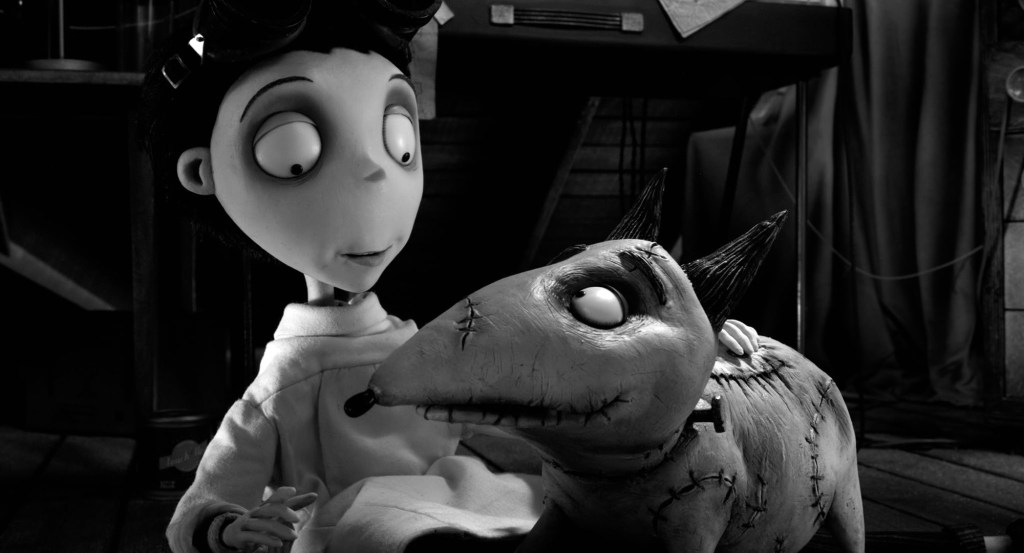
Release Date: October 5, 2012
Budget: $39 million
Domestic Box Office: $35.3 million/ Worldwide: $81.5 million
RT Score: 88%
Of the films Burton directed in the 2010s, I’ve always been fond of only one deserving more attention: Disney’s Frankenweenie. Most probably don’t know that this is based on the early live-action short he did for the company before he got his big break. However, they believed it was too scary for kids. The story follows Victor Frankenstein (voiced by Charlie Tahan), a young kid who loves science, and his best and only friend, his bull terrier Sparky. But tragedy hit him when Sparky got struck by a car. Inspired by the realization that the power of how electricity can bring anything back to life, Victor decides to dig up Sparky and reanimate his beloved pet, which leads him to hide from anyone else in the neighborhood.
His second animation feature seven years after Corpse Bride, there’s more to like in Frankenweenie. With this paying homage to the classic Frankenstein story and other monster-related films, including the black-and-white appearance, the movie doesn’t rely too heavily on the tiring things that Burton does in his most recent films. By that, it almost makes it feel nearly different from just Frankenstein, but with a dog in the stop motion approach that’s seamlessly impressive. Much of the heart is Victor’s relationship with Sparky and doing whatever he can to protect him, even if it means disobeying the laws of science. Anyone who has had a dog in their life will understand. Plus, how could you not like Sparky? The climax is almost reminiscent of Edward Scissorhands, but it is touching enough to forgive its ending. For those wanting a perfect double-feature to watch around Halloween, this and ParaNorman would make for a great pairing. Frankenweenie basks in how weirdly charming it claims to be, and that’s why it still works for me as an underrated entry in Burton’s filmography. It wasn’t the box office success it hoped for, but it earned itself a well-deserved Academy Award nomination for Best Animated Feature.
8) Sweeny Todd: The Demon Barber of Fleet Street
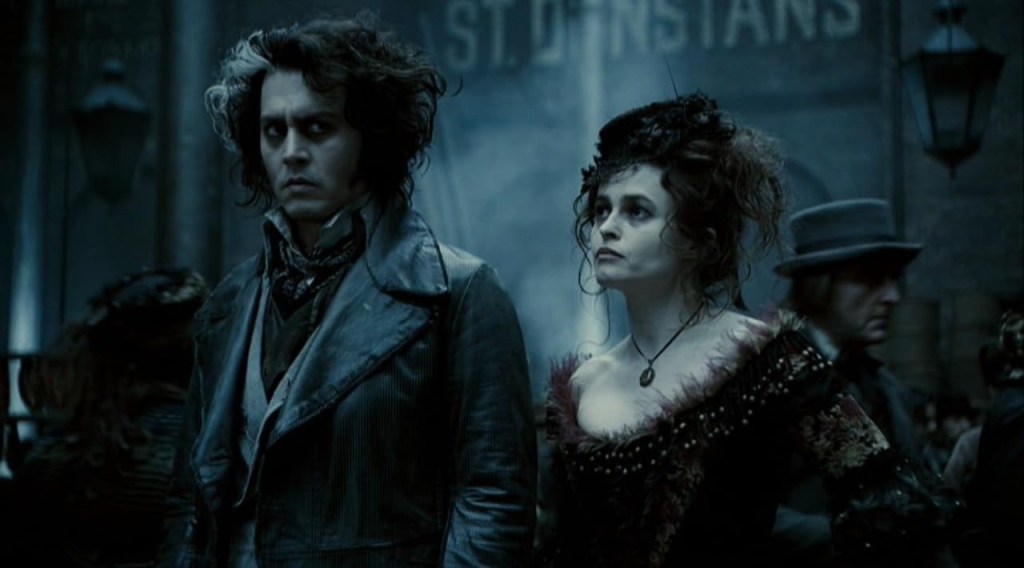
Release Date: December 21, 2007
Budget: $50 million
Domestic Box Office: $52.9 million/ Worldwide: $153.4 million
RT Score: 86%
You wouldn’t think Burton and musicals go hand-in-hand, considering everything he’s done until that point. However, when you need a director to do what many consider a faithful adaptation of Stephen Sondheim and Hugh Wheeler’s stage musical, it’s almost a match made in heaven with what he accomplished with 2007’s Sweeney Todd: The Demon Barber of Fleet Street. Johnny Depp plays the titular character, an English barber wrongfully convicted of a crime by Judge Turpin (Alan Rickman), stealing his wife and ripping apart his family. Fifteen years later, Sweeney, initially Benjamin Barker, returns to London and his Fleet Street shop above Mrs. Lovett’s (Helena Bonham Carter) meat shop to exact vengeance on the man who ruined his life.
Bringing a beloved musical to the big screen had to be the most challenging move on Burton’s part since he had never directed one before, and he had envisioned one since he had a fascination for it when his career took off. Would this be the perfect film to introduce those not considered musical fanatics? Maybe not when there might be better options, but Sweeny Todd works to blend a Victorian slasher, music, and a touch of humor in a beautifully bleak film. Those unaware of this filled with songs might back out early on. Yet, it fits with Burton’s other films with a macabre sense of disturbing imagery. And it’ll make anyone rethink eating meat pies or getting a shave from a razor. Depp’s performance as Mr. Todd already had us assume to play off the role, but what helped embody the darkness of his role more is the surprising realization he’s not bad of a singer along with Carter. Sweeny Todd: The Demon Barber of Fleet Street will be remembered as the last entertaining Depp/ Burton collaboration that plays to his strengths that’s gruesome and wonderfully crafted through its visuals, especially its Oscar-winning Art Direction from Dante Ferretti and Francesca Lo Schiavo.
7) Batman Returns
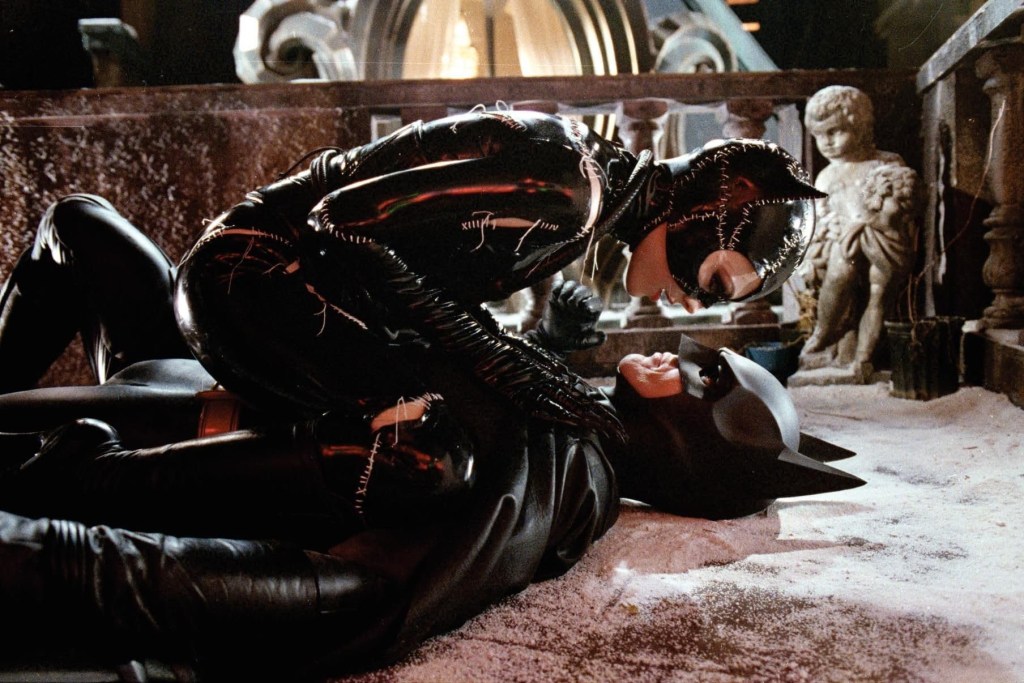
Release Date: June 19, 1992
Budget: $80 million
Domestic Box Office: $162. 8 million/ Worldwide: $266.8 million
RT Score: 82%
Some people debate which is superior between Batman (1989) and Batman Returns, believing the first movie is better than the second, while others believe vice versa. For me, they’re almost the same. But how anyone would call Batman Return a bad movie is dumb because it’s a solid, if flawed, sequel showing Burton taking free range with this 1992 installment. With Bruce Wayne (Michael Keaton) tapping into his alter ego Batman to save Gotham City, he’s now faced with two new foes- Oswald Cobblepot/ The Penguin (Danny DeVito), who seeks to become the next major of the city after coming out from the sewers and Selina Kyle/ Catwoman (Michelle Pfeiffer), who seeks vengeance on her industrialist boss Max Shreck (Christopher Walken) after he pushed her out the window and resurrected by cats.
Does Micheal Keaton still crush it as the titular hero? There’s no doubt about it. Has there ever been anything negative to say about Danny Elfman’s score or the breathtaking production design that makes the gothic Christmas scenery come to life? But it’s the new additions that make this sequel worth it. Danny DeVito was the perfect choice in the ‘90s to play the scary and even perverted Penguin (one of the dumbest Razzie nominations ever). Of the two villains, though, Michelle Pffifer’s performance as Selina Kyle/ Catwoman will be forever unforgettable in making the character equally sexy and energetic. The scenes with her and Keaton, especially when dancing at the charity ball, ignite fantastic chemistry between them. What makes Batman Returns have its detractors decades later is that it adopts a much darker tone than its predecessor and feels more like the Burton show rather than Batman. I can see both sides. But when it can get silly in parts, I enjoyed the differing styles of the first two. Not everything is for kids; for example, Penguin biting a guy’s nose is a lot for a PG-13. Batman Returns isn’t for everybody, but it’s far from a disappointing sequel when it’s entertaining for fans. With a better balance of showcasing the hero and villains amongst a grim story, it’s better than the other superhero movies we have within the decade. But to be fair, the parents who complained about this are why we eventually got the sort of kid-friendly Batman Forever, which I don’t understand why anyone likes it because it’s bad.
6) Ed Wood
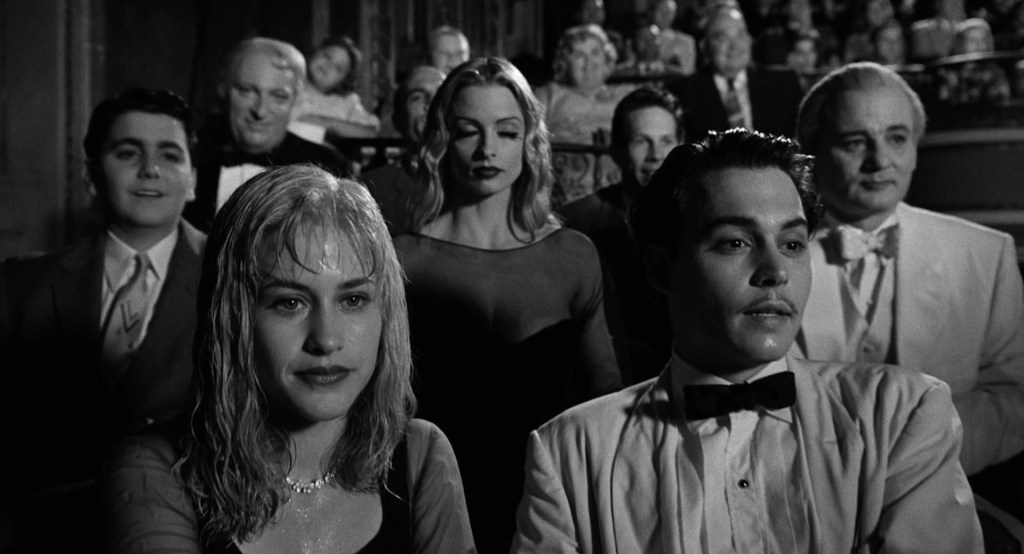
Release Date: September 30, 1994
Budget: $18 million
Domestic Box Office: $5.8 million/ Worldwide: $13.8 million
RT Score: 92%
Following a string of successful films focusing on Batman and characters that came straight from his mind, Burton’s next approach was to make his first biopic about what many call the “Worst Director of All Time.” And because this wasn’t leaning toward the supernatural route, Ed Wood was a change of pace early in his filmmaking career. The true story takes on the period in which inspiring filmmaker Edward D. Wood Jr. (Johnny Depp), who also loves dressing in women’s clothing, attempts to make a name for himself in the film industry, hoping to be a successor to someone like Orson Wells. We see him making his visions come to life with his strange low-budget films Glen or Glenda and the infamous Plan 9 from Outer Space while helping washed-up, heroin-addicted Dracula actor Bela Lugosi (Martin Landau) to revitalize his purpose as a living star.
Whenever there’s a film about the movie itself and the behind-the-scenes of Hollywood, it is always fascinating. From someone who was familiar with Ed Wood but stayed away from his films that have become B-movie classics in some circles, Burton and the screenwriting duo Scott Alexander and Larry Karaszewski created this reasonable amount of empathy for a man with so much ambition where anyone who had a dream can easily relate, even when the movies themselves are less than stellar. The goal of Ed Wood wasn’t just to make fun of his work but to unexpectedly celebrate him without coming off as a parody, as some might’ve assumed, despite being shot in black-and-white. Depp’s performance will have us wonder what happened to his talent a decade later that sees him matching the director’s weirdness in the best way. Better yet, Ed’s friendship with Lugosi provides the most hilarious and touching moments, with the unrecognizable Landau stealing every scene he’s in as the theatrical Hungarian actor. While the film didn’t fare well at the box office with its limited release, it won two Academy Awards: Best Supporting Actor for Landau and Rick Baker’s third win for Best Makeup.
5) Big Fish
Release Date: December 10, 2003
Budget: $70 million
Domestic Box Office: $66.8 million/ Worldwide: $123. 2 million
RT Score: 75%
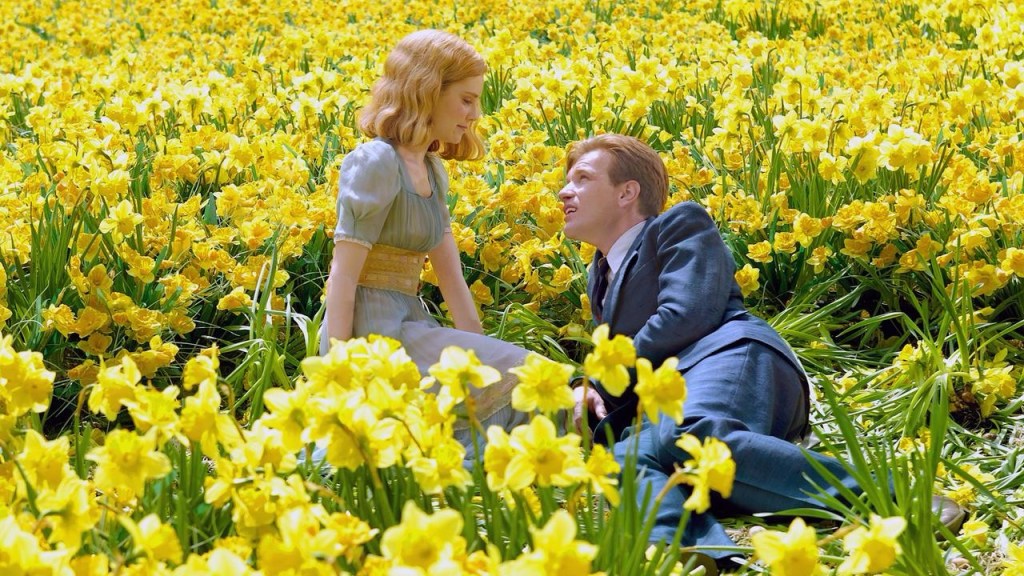
After Planet of the Apes wasn’t the critical hit everyone expected it to be, Burton’s decision to tap into his sentimental side for Big Fish was something we didn’t think he could do, and the results are a Southern fantasy drama that, after 20 years, I believe is still one of his best. Based on the novel by Daniel Wallace, Will Bloom (Billy Crudup) returns to his hometown in Alabama after his father, Edward (Albert Finney), falls ill and is nearing death. Will is known best for his storytelling and unique life, which his son doesn’t necessarily believe, especially when re-telling the story of the day he caught a catfish on the day he was born. But that all changes when he recounts his life as a young man (Ewan McGregor) on his deathbed, the strange facets of everything and everybody he encounters, from discovering the hidden town of Spectre to working at a circus where he realizes the woman he’ll eventually marry.
Big Fish is one of Burton’s most feel-good grounded stories from the 2000s, emphasizing the importance of how storytelling, whether it is a fact or not. And to think that Steven Spielberg was attached initially to do it. We’re led to believe Edward’s life is all true as they open a sense of wonder, which might’ve helped Burton connect to Wallace’s story after the passing of his father. Ewan McGregor’s career doesn’t receive much attention early in the decade, and his part of the younger Edward is one of his best performances, showing his skills to be this likable and people-pleasing Forrest Gump-type. This is another film showcasing a great stellar ensemble including Finney, Danny DeVito, Helena Bonham Carter, and Marion Cotillard in her first American film, believe it or not. If anyone thinks about their relationship with their father, this will undoubtedly leave many in tears, including me, in the last ten minutes. Told through his signature style while addressing themes of death and father-son dynamics, Big Fish is all too delightful and heartwarming, something we don’t see often with him nowadays.
4) Edward Scissorhands
Release Date: December 7, 1990
Budget: $20 million
Domestic Box Office: $56.7 million/ Worldwide: $86 million
RT Score: 89%
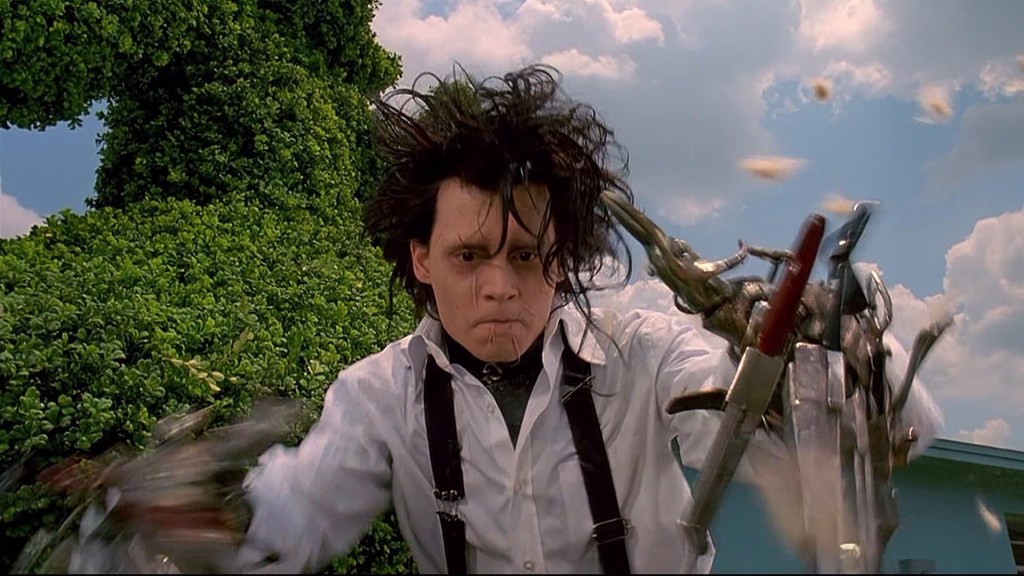
Those who watched Edward Scissorhands for the first time would completely understand how this was inspired by an idea Burton had during his childhood. And with the right mind to make this a reality, it’s a fantastical take on Frankenstein’s story that’s hard to hate. His first collaboration with Johnny Depp sees him as the eponymous man created by a mad scientist (Vincent Price in the final film role), whose untimely death prevented Edward from receiving replacement hands instead of scissor blades in their place. Once door-to-door Avon saleswoman Peg Boggs (Dianne Wiest) discovers him alone in an isolated mansion, she takes him into her home in the suburbs to live with her family. It’s only a matter of time before he uses his appearance for good in his surroundings by cutting hair and trimming hedges for the community.
Out of all of Depp’s characters in his career, the misunderstood Edward indeed finds himself crossing the bridge between creepy and kind without speaking much dialogue. At the same time, the makeup work by Stan Winston and Ve Neill went away with his good looks. You see him as a man sheltered from life and find the opportunity not to be an outcast when he cuts with style, being accepted by the neighbors. Anytime this comes up, we’ll wonder what happened to Depp as an actor. But this remains one of Burton’s most famous films for so long because it can embrace the weirdness and offer its purpose of accenting others no matter how weird they can be on the outside. Give me a film that can make me laugh and almost shed a tear, and it’s a memorable experience. Topped with superb production design by Bo Welch, one of my favorite Danny Elfman scores, and an excellent ensemble including Winona Ryder, Wiest, and the late Alan Arkin, Edward Scissorhands is the uniquely dark comedy that quickly established early on how creative Burton can be.
3) Batman
Release Date: June 23, 1989
Budget: $48 million
Domestic Box Office: $251.4 million/ Worldwide: $411.6 million
RT Score: 76%
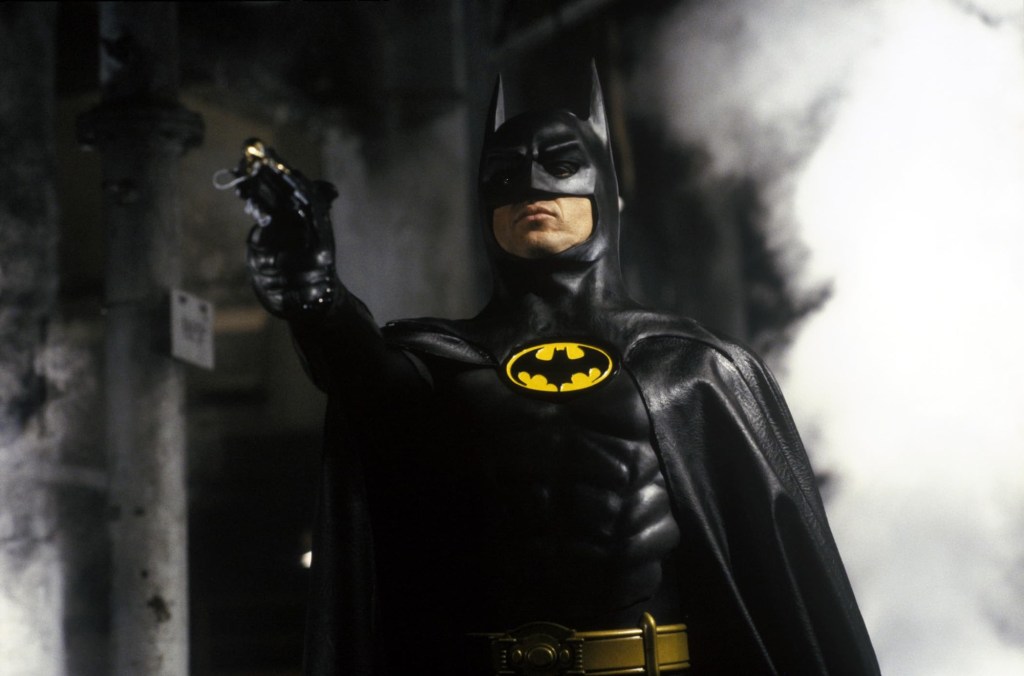
If you were a kid or a teenager alive during the summer of 1989, seeing Batman in theaters must’ve been an event. When comic book movies weren’t as popular as they are now in Hollywood, this was the biggest superhero movie since the original and lighter Superman and its sequel. This was a big deal for a film that would contrast hard to its television counterpart. In his early ‘30s, Burton had the biggest challenge of his career not to disappoint fans of the iconic DC comics hero. By that, Batman is a classic in its own right that’s entertaining for adults and children. The first installment sees billionaire Bruce Wayne put on his alter ego of the Caped Crusader to strike fear into the criminals of Gotham City. With the city about to celebrate its 200th anniversary, the mayor wants to stop the rise of crime, which causes problems later on when Jack Napier attempts to take over the criminal underworld under his new name, “The Joker.”
Before Christopher Nolan or Matt Reeves made the characters and their surroundings memorable with their interpretations, you can see how Burton’s vision significantly influenced the tone darker than expected within this adaptation, for better or worse, even when it has those touches of camp without being in your face. When we step into Burton’s world of Gotham, it’s so distinct to imagine with its Oscar-winning art direction from Anton Furst. Those who thought the controversial casting choice for Michael Keaton would ruin the film would eat those words when he proved he could be a cinematic Batman and a better Bruce Wayne when dealing with the duality of his life. Still, it’s no surprise we have Nicholson’s over-the-top performance as the Joker, channeling his inner Caesar Romaro with every scene he’s in by being terrifyingly humorous. Yet why does this dynamic between the hero and villain work? It’s because of their surprising connection to their past. Certain elements feel dated, from visuals to Prince’s music. Nonetheless, Burton’s touch to Batman was the update success everyone needed and paved the way for better comic book movies.
Full Review—> RIGHT HERE
2) Pee-wee’s Big Adventure
Release Date: August 9, 1985
Budget: $7 million
Domestic Box Office: $40.9 million
RT Score: 88%
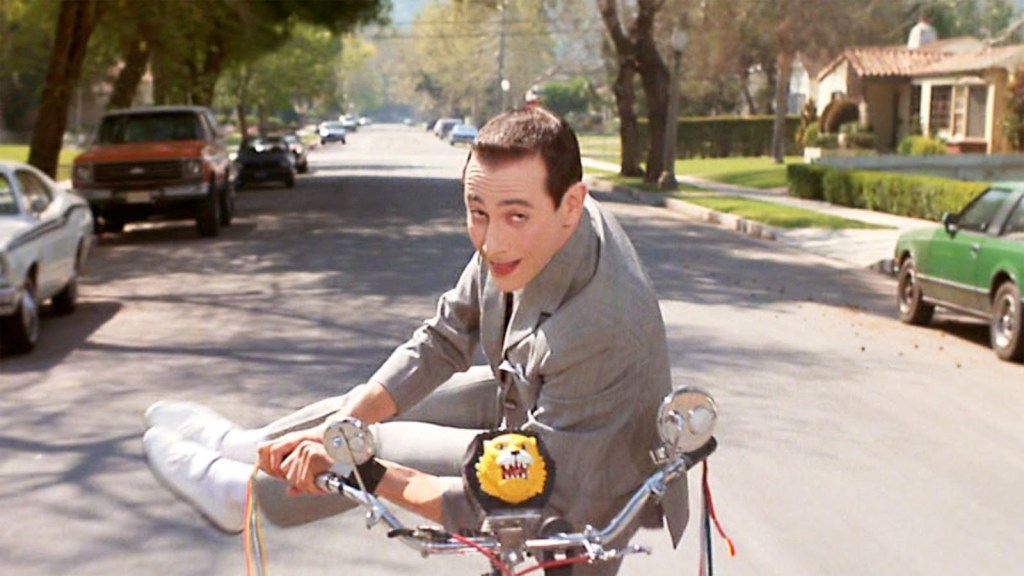
As someone who usually describes themselves as a late millennial, I never grew up watching anything Pee-wee-related when I was younger, and it was before my time. Maybe it was too weird to understand the craze, but it certainly has an audience to get caught up in the wacky antics of this character. Before starting on an HBO stage show and later a cult favorite television series, Burton made his feature directorial debut with the endlessly entertaining Pee-wee’s Big Adventure. Everyone’s favorite eccentric man-child, Pee-wee Herman, loves his red bicycle more than anything. But while shopping, he discovers it’s been stolen. Now, he goes on an unforgettable adventure to get his bike back while meeting new people.
After seeing his Frankenweenie short, Reubens picked Burton, and it’s a winning choice. What’s there to say about Pee-wee’s Big Adventure besides that it’s a straightforward 90-minute movie acceptable to anyone with a funny bone? Seeing how his mind works in a world probably different from his, Pee-wee’s quest to get his bike finds him in the predictable hijinks and odd encounters. But that’s what you come to expect. Those who know who the character is will know his first movie won’t be complex to follow, and a young Burton in his mid-20s understood how it’s supposed to be playful in the style of a live-action cartoon. And when this has a script written by Reubens, Michael Varhol, and the late great Phil Hartman, what’s more memorable than Pee-wee dancing to “Tequila” in the biker bar or getting in the craziest chase through Warner Bros. Studios? Nobody knew what the future held for Burton, but nothing is like Pee-wee’s Big Adventure, still retaining that sense of silly humor that remains a cult comedy hit. From his legacy, there’s only one Pee-wee. Rest in Peace, Paul Reubens.
1) Beetlejuice
Release Date: March 30, 1988
Budget: $15 million
Domestic Box Office: $73.7 million/ Worldwide: $73.7 million
RT Score: 86%
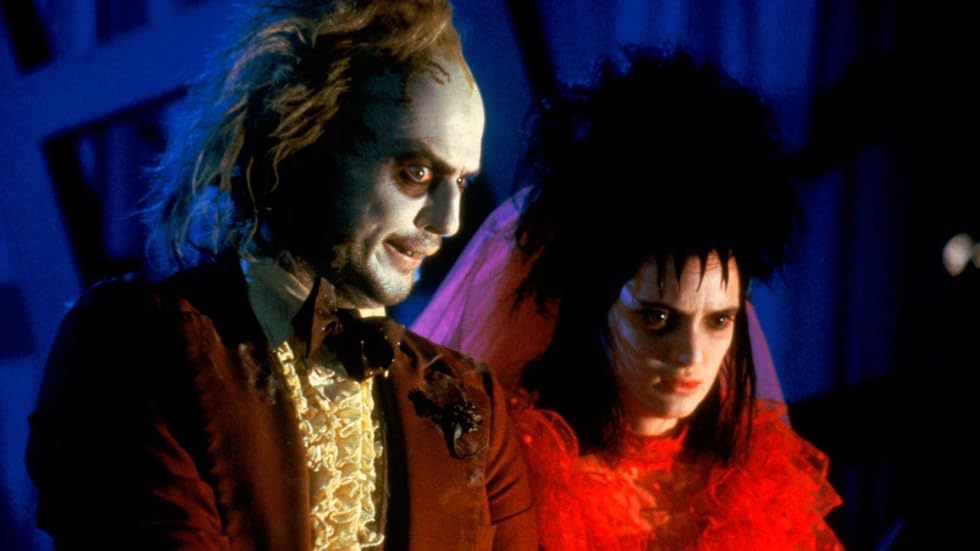
Sometimes, a second feature from a filmmaker can make or break one’s career. But that’s not what happens when Burton’s follow-up to Pee-wee’s big-screen debut ventures into a vastly different territory that I’ve always thought was quintessential him: Beetlejuice. After Adam and Barbara Maitland (Alec Baldwin and Geena Davis) died in a car accident, the recently deceased couple are confined in their home as ghosts. What’s worse is the Deetz family- Delia (Catherine O’Hara), Charles (Jeffery Jones), and Lydia (Winona Ryder)- move into their Connecticut home and plan on remodeling it into a work of art, forcing them to scare them away unsuccessfully. Their best solution is to contact the “bio-exorcist” Betelgeuse (Michael Keaton) in the high attempts to make them move out.
It’s not uncommon to blend horror and comedy, yet with Burton’s talents to make this supernatural ‘80s classic work for older kids and more so for adults, the results are genius. Somehow, it manages to be unexpectedly morbid about a dead couple, but embracing that spooky nature is a lot of fun, which never becomes repetitive. Michael Keaton’s fast-talking ghostly spirit electrifies every scene despite the titular character having less than 20 minutes of screen time, and he seemed to have a blast playing him. Imagine if we would’ve gotten Sammy Davis Jr. in an alternate universe. Everything you can imagine in a great film is here, from immersing yourself in the gothic settings, versatile cast, and Oscar-winning makeup effects that are still convincing today. I almost forgot how funny this was, ranging from Betelgeuse’s quips to the “Day-O (The Banana Boat Song)” scene that’s comedy gold. Over 30 years later and proved to be an absolute breakout, Beetlejuice remains an instant classic amongst Burton’s work, past or present, with that original creativity on display that’s hard to resist.
 TV and City