The Miniature Wife premieres April 9 on Peacock.
By Elazar Abrahams
Elizabeth Banks and Matthew Macfadyen star as Lindy and Les Littlejohn, a married couple whose already strained relationship gets even tougher when a scientific accident shrinks Lindy down to slightly above insect size. What a silly, high-concept hook The Miniature Wife has.
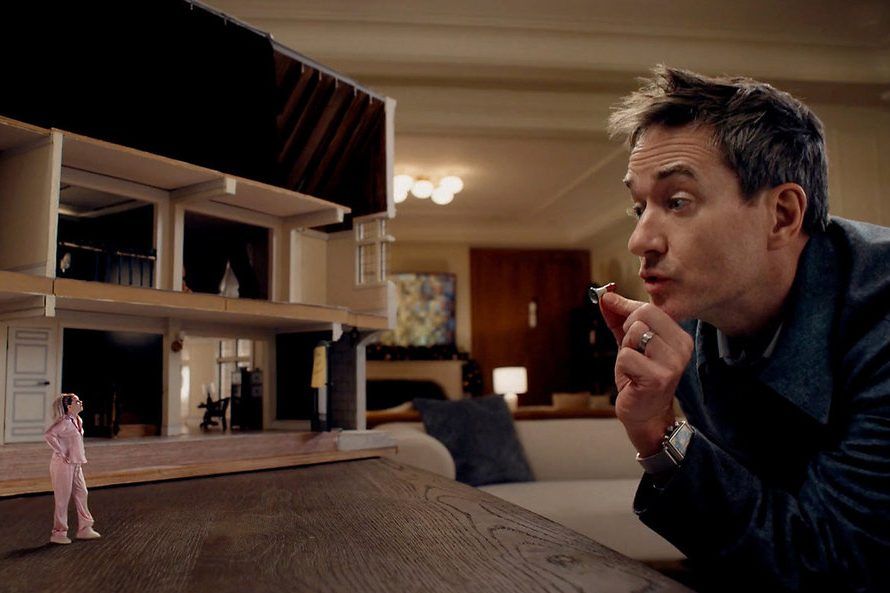
For the first half of the season, it’s loads of fun. The show leans hard into perspective and scale, with special-effects work and camera choices doing a lot of the heavy lifting, and doing it well. The way we see Lindy’s shrunken world and the shift in what now counts as dangerous, like the sheer intimidation of normal household objects towering over her, is very impressive.
The comedic side of the premise is played for strong laughs, from Les needing to shrink food and clothes for his now tiny wife, to the volume he can speak without blowing her away. This is more than enough to sustain interest for about five episodes.
The other big strength is that underneath the goofy shrinking hijinks, the show is a moving, realistic portrait of how a relationship can sour. It uses well-written flashbacks to show how a once-loving and infatuated couple can end up at this point of resentment. The shrink-ray hijinks are a Trojan horse to smuggle some surprisingly strong marital drama onto the screen.
Unfortunately, the second half of the season gets bogged down in subplots that detract from the main story.
Les trying to find a cure and fix the mess he made is the obvious through line, and that part is fine. But so much of the lab drama around him, like the demanding boss, the workplace politics and flirtations feel like padding. The show also invests a lot of runtime into the couple’s daughter’s fractured relationship with her old high school friends, and while some of that material is thematically relevant, it doesn’t grab attention like the central conflict. As the season progresses, it starts to feel like The Miniature Wife is filling time rather than escalating the interesting parts of the show. When it eventually does shift into a higher level of chaos, viewers have already been trained to tune out due to the loss of momentum.
The pacing issues are made worse by the runtime. These episodes are over 40 minutes each, and The Miniature Wife leans pretty heavily into comedy. This didn’t need to be built like hour-long TV. Half-hour episodes, or at least tighter cuts, would have kept it sharper and funnier.
It’s a shame, because when the show is good, it’s quite appealing. Banks is great, and Macfadyen is a perfect foil to her. The craft that went into some of the size gags is delightful. But the second half becomes less about the inventiveness of the premise and more about killing time until the story reaches its destination.
I give The Miniature Wife a B-.
 TV and City