By Zachary Greenberg & Akiva Poppers
A different kind of dating app has been making the rounds among young professionals in the city this summer. Loop, a hot new platform for singles to meet, does away with algorithms and instead functions in a rather old fashioned way. Users can pair and suggest their mutual friends to each other, or even those mutual friends’ friends. While this form of classic matchmaking is hardly revolutionary, in an age where Hinge just serves up random people in your radius, Loop feels oddly refreshing. The app streamlines the entire process in a sleek, user-friendly package, and even non-singles can join and help their network. Singles can still set their friends up while receiving ideas for themselves too, which democratizes the ethos of matchmaking. Because each side of a match made on Loop is socially connected, even if tangentially, there’s an inherent element of trust that’s hard to find elsewhere.
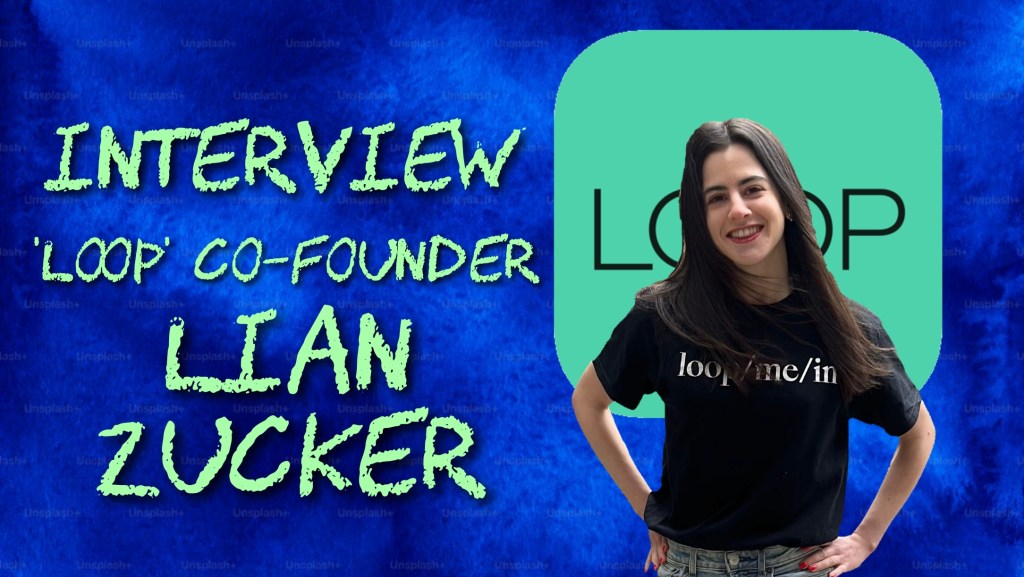
After hearing the buzz all around Manhattan, TV and City recently sat down to interview one of the founders of Loop, Lian Zucker.
TV and City: Lian, thank you for joining us. To begin, can you tell us your backstory—where you’re originally from, what led you to New York City, and what got you interested in creating a matchmaking app?
Lian: Certainly, it’s a pleasure to be here! I was born in Tel Aviv, Israel, but at a young age, my family relocated to Los Angeles. I went to Yale where I studied applied math and moved to New York after graduating. I started at Evercore doing investment banking, which provided a strong launching pad for my career. I was entrepreneurial at heart and knew I wanted to start a company someday.
My first startup role was Jet.com as a senior product manager. It was acquired by Walmart a year later. This was a full-circle moment for me as I had been working in mergers & acquisitions for clients and suddenly found myself on the other side of a big acquisition. From there, I joined the founding team of Keeps.com and Thirty Madison as Head of Product – I was actually the first employee. I was there for three years, and the company achieved unicorn status. I learned a ton, and the entire experience instilled in me the confidence to embark on further entrepreneurial endeavors.
The inception of Loop is profoundly rooted in my personal experiences. As a 32-year-old single individual, I, as well as many of my friends, have encountered the challenges of modern dating firsthand. While I’ve had the pleasure of connecting with wonderful individuals, I’ve noticed a stark contrast between my generation’s approach and that of our parents. The prevalent swipe-centric model, which you find on platforms like Tinder and Bumble, has perpetuated the idea of a seemingly endless array of choices—a bottomless pit that inadvertently breeds a paradox of choice. This is the plight of most people on modern dating apps. Singles are presented to you with no social context, two people plucked out of a vacuum and put onto a petri dish. This is counter to the way that humans have met partners for the last millennium, which was rooted in social interactions, parental guidance, and community matchmakers.
Loop is not a Jewish app, but it has become popular among young Jews. What factors do you think contribute to its appeal within the Jewish community?
Loop’s concept is fundamental — it is agnostic of religion, race, etc. We believe the most valuable thing when receiving a suggestion is to hear about someone from an acquaintance you trust. Alarmingly, surveys reveal that over 70% of individuals feel they are being deceived by something within dating apps. Approaching a date with such apprehensions is a recipe for disappointment. We believe that what is in our control when finding love is having something to trust; we then add a touch of serendipity back into the equation. My parents met via a mutual friend. There is nothing inherently new in our approach, we are just taking human dynamics which have existed for a long time, and giving them a modern twist.
What makes Loop different from other dating apps?
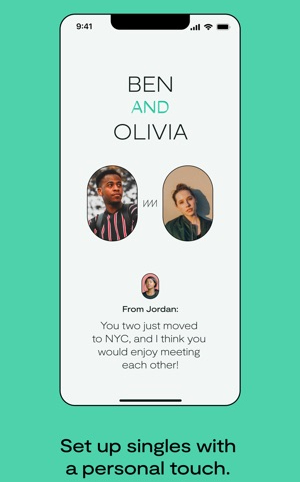
Correction! Loop is a matchmaking app, not a dating app. Everyone creates setups, and some people receive them. You indicate if you are single or just there to set up your friends. You then build your loop by connecting with friends who are already on the app and by inviting ones who aren’t to join. The app allows you to see your friends’ single friends and ask them for intros. So the matchmaker doesn’t have to even come up with a setup themselves. Just exposing their networks creates potential opportunities. Regardless of whether the idea came from the matchmaker or the single, it’s presented in the app in a way that attributes the idea to the matchmaker.
Loop democratizes matchmaking. By simplifying matchmaking as knowing two people and making a valuable introduction, Loop drives home the fact that anyone can be a matchmaker. A lot of people struggle with asking their friends for help—it’s a tough conversation for the single to have—and on the matchmaker’s side it can be tough to ask someone if you want to be set up with someone else. So the app makes everything much easier and streamlined.
In your opinion, can friends’ involvement in matchmaking lead to bias?
Friends are already involved in dating lives. I convinced a friend to go on a second date with a guy she didn’t want to continue with, and she ended up marrying him. So friends play a big role in encouraging, in both directions, and other aspects of dating.
How did the COVID-19 pandemic impact the dating landscape, potentially contributing to the creation of Loop?
We started building the app in September 2022 when my co-founder and brother quit his job at Meta to turn our vision into a reality, and we did planning before that. COVID drove a lot of people onto dating apps as their only recourse. Eventually, however, all this did was lead people’s frustrations to reach a breaking point. People crave meeting in a different way; they are sick of dating apps and COVID accelerated that becoming the case.
That’s so interesting! We had some questions about the app itself. When the app debuted, matchmakers were only able to see their friend’s response to a setup; they were unable to see the response from their friend’s friend. This was later changed. What was the reasoning for this and how do you balance the privacy of singles with facilitating matches?
Certainly, the app’s user interface as it pertains to how setups are displayed is an evolving process driven by user feedback. We’ve been actively incorporating numerous features and improvements that customers have requested. As for matchmakers engaged in creating second-degree matches, we received considerable feedback from them requesting the ability to view both parties’ responses.
Navigating this landscape is complex as there’s a broad range of opinions and perspectives. Our focus is on creating a platform that caters to the majority of users. Therefore, we face the challenge of balancing user privacy and the need for accountability. In the context of this specific scenario, we determined that enabling matchmakers to access both responses was crucial, and it takes precedence over privacy concerns. This decision ensures transparency and aids in making informed matchmaking choices. In the next few weeks, we will make “match management” much easier and iron out how information about the match is communicated and displayed to the members involved.
Is Loop considering adding more filters? Right now it seems that the search selection for singles is very broad.
We may implement enhancements like filters. From my personal experience, I can describe in a checklist form what I am looking for, and every single guy who I have fallen for has not met the criteria in some form.
Humans are complex; we cannot be distilled down to bullets and rigid filters. The beauty of Loop lies in its unique approach—instead of relying solely on predefined attributes, the filters are embodied by the matchmakers themselves.
It’s OK to aim just outside of your checklist zone if your friend suggests that there is something to work with. If the matchmaker thinks it’s right, we encourage that.
Has Loop collaborated with social media influencers or content creators to promote the app and its features?
We have done absolutely zero paid marketing. All of our growth has been organic/word of mouth. Loop’s inherent virality is amplified as users share their experiences, contributing to the growth of their loops and connections.
We believe that matchmaking is in vogue. People are sick of dating apps and want a serendipitous way of meeting other than swiping, and Loop offers that. So what has helped us grow are the diehard fans who have brought Loop into their communities by encouraging their networks to join.
What has been the most surprising or unexpected feedback you’ve received? Have you received any feedback or suggestions from users that have influenced new features or updates in the app?
We are surprised at how fast we have grown; we’ve needed to beef up our servers to meet demand. We haven’t encountered any radical negative feedback. On the contrary, we’ve received an outpouring of support, and I personally have received thousands of emails expressing gratitude for building this. We also have received a lot of feature requests—things to change or add—but we did not expect to need to implement so many requests so quickly.
We are working on a range of improvements—both major and minor—that have been inspired by our users. One major improvement coming soon is that we will add messaging between singles and matchmakers!
Have you received any negative feedback from traditional matchmakers who have this type of business offline?
Zero matchmakers have told us that we are hurting them. That’s because we are not; we are helping them.
Has Loop considered adding a gaming aspect, such as leaderboards for most setups, to the experience?
The app is already gamified a bit and we will be doubling down on that. Everyone has their style of setting others up and we are still in the learning phase. We are seeing how people interact with the product; there is a lot that we know, and there is a lot that we don’t know. You can’t build a consumer app in a vacuum. Loop’s evolution will be based on user insights that we gather over time.
Any final thoughts for our readers?
To address the non-singles: Making a worthwhile introduction is one of the greatest things you can do for someone. It is important to view matchmaking as an opportunity to create an opt-in; if the single says no, that is fine.
LinkedIn discovered that the best job opportunities came from weak ties, something to which the applicant doesn’t have a lot of connections. This is really applicable when it comes to dating. It’s very likely that you know your best friends’ best friends. But there are more people you know less well than people you know well. You probably have not tapped into those networks, even if you have tapped into your closest friends’ networks. So it is important for singles to internalize that you should go in with an open mind. There is huge power in saying yes; there is huge power in growing your loop and seeing where things go. Singles should be open to the idea of a match coming from someone they don’t even know very well.
Open your heart and mind to the unexpected introductions, for they might just lead you to something extraordinary. Remember, the magic of connection often thrives where you least anticipate it. Never be afraid to expand your Loop and see where life takes you!
You can download Loop HERE.
 TV and City