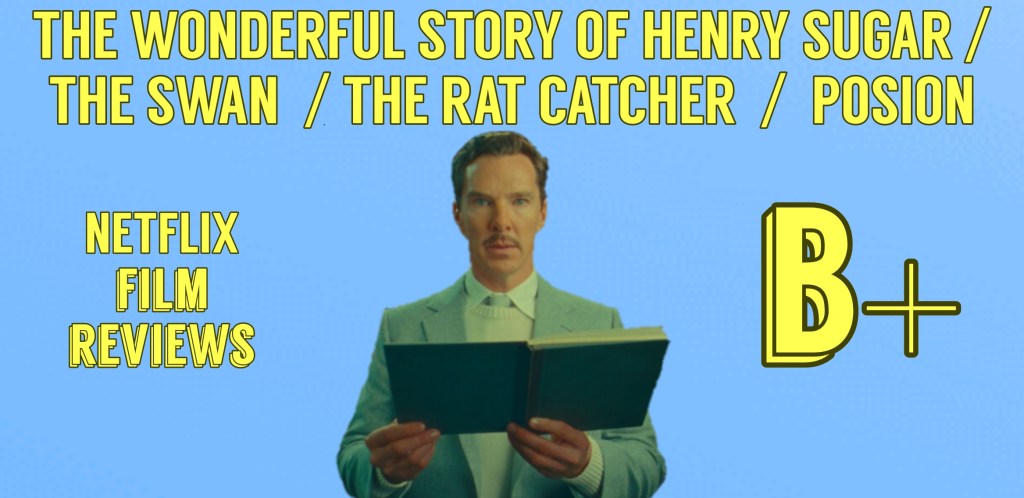
The Wonderful Story of Henry Sugar, The Swan, The Rat Catcher, and Poison are now streaming on Netflix.
By Greg Wheeler
Sometimes, you come across stories that leave you spellbound but also befuddled on your first rendezvous with them. That typifies Wes Anderson’s movies for me. Every time I rewatch one of his films, I find new takeaways – be it a fresh angle of analysis, an easter egg, or even a simple life lesson. Anderson’s body of work has always been a source of delight and wonder.
His latest offerings are four short films based on lesser-known stories from the Roald Dahl canon, each of which premiered on Netflix, one after the other, in the last few days. Let’s delve into each film of the collection.
The Wonderful Story of Henry Sugar
This one stars Benedict Cumberbatch, Ralph Fiennes, Dev Patel, and Ben Kingsley, and is an adaptation of Dahl’s short story of the same name. Those aware of Anderson’s work will find themselves familiar with the narration style in this short. The film begins with Fiennes, who plays Roald Dahl, telling viewers about the hypocrisy and greed that encamps in the minds of the rich. He then introduces Henry Sugar, whom this story is all about.
Henry is a 40-something-year-old man who is living off his father’s riches. He spends his days idly, looking for ways to earn more money, and does not wish to make any fruitful use of his time. When he comes across a diary detailing the story of the mysterious Imdad Khan, the man who can see without his eyes, he is utterly intrigued. Henry makes it his life mission to acquire the gift that Imdad had in order to make money instantly by gambling in the casinos. What proceeds from here is a nice fable about riches and fulfillment in life.
True to Wes’ style, the characters repeatedly break the fourth wall. This meta-ness invites the viewers closer into the story. It makes them feel involved.
The warm pastel shades synonymous with the director’s earlier works make a comeback here. It’s a blessing to see some of the stalwarts of the acting world come together, even if only for a mere 38 minutes.
The rapid narration by the characters, the scenes changing (literally) on screen to the stop-motion-esque visuals in the film – this is a real treat for those who wished to see more of Anderson after this summer’s Asteroid City. This short film could also be a good starting point for someone new to Anderson’s filmography.
The Swan
The Swan is delightfully surreal. Again, the story is adapted from Dahl’s tale of the same name, inspired by a newspaper excerpt that he carried around in his suitcase for nearly 30 years.
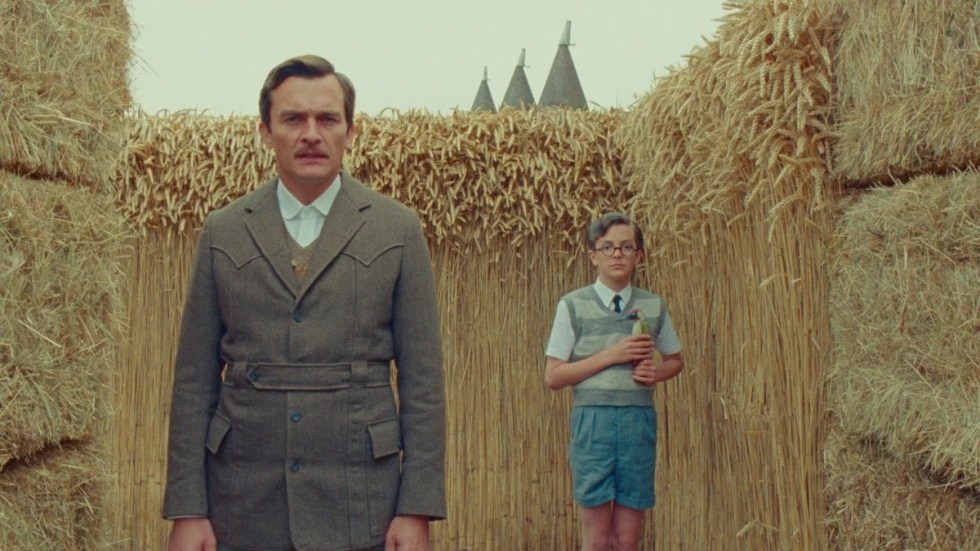
The plot is a simple one, and revolves around a small boy tormented by two bullies, who grow increasingly more dangerous and crazed as the film progresses.
The quick watch, narrated by Rupert Friend, moves fast and plays out like a stage production. Its minimalist style is partly why this has so much charm. However, it’s the visuals that’ll keep you mesmerized and glued to the screen. All the usual Anderson tricks are here, including some great uses of color and trippy, engaging camera shots that show off a range of different techniques. You’ve got your usual tracking shots and static cameras, but equally, there’s a very distinctive directorial choice to try and instill some of Dahl’s humor too. At one point, our narrator talks to the cameraman, who messes up and points the lens at the wrong object before righting itself. These little quirks are a great addition and help the film stand out.
The themes of this story are freedom, endurance, and faith. This can be seen numerous times throughout the narrative, and it’s captured really well here. Of course, the motif of the swan and taking flight are the big talking points here, and that’s captured well. Dahl would be proud of this one.
The Rat Catcher
The Rat Catcher is a wonderful ode to Dahl’s oddities and surreal sense of narrative wonder. Again, the story is simple but incredibly engaging, and Anderson’s style helps elevate it.
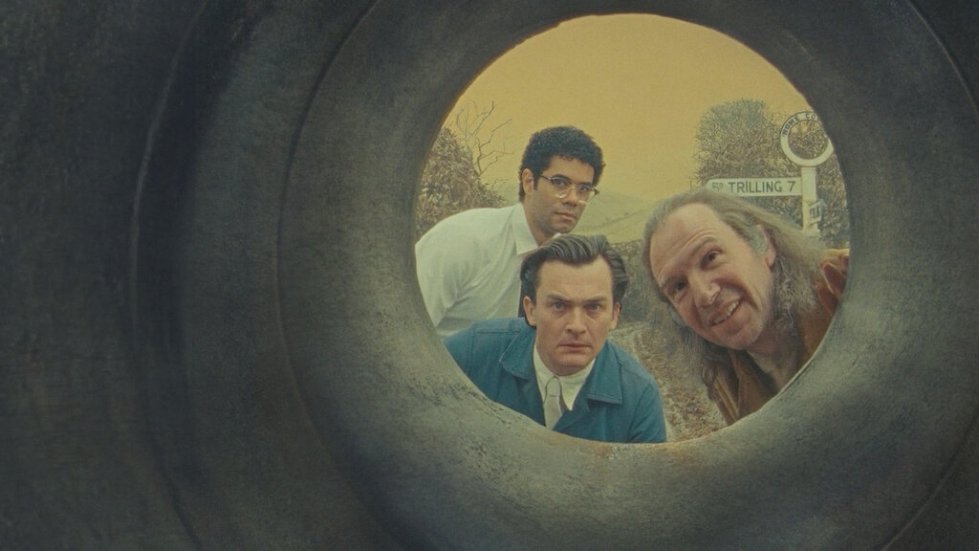
Narrated by Richard Ayoade, and performed by Fiennes and Friend, the story sees Ayoade serve as the story’s narrative crux and driver. Fiennes is fantastic as the Rat Man, exuding a strange menace and crazed look, brought to life with a deliciously twisted charm.
This certainly helps keep this 15-minute short engaging, as the narrative recounts the story of a professional rodent killer called Rat Man showing up in a quaint village and intending to kill the rats there, which are seemingly becoming a menace.
The first half sticks to the usual Wes Anderson trickery, with lots of subtle camera cuts, lovely tracking shots, and some really nice depth-of-field views. However, it’s the second half that stands out, as Anderson’s creative lighting and shadows, as well a clever use of animation helps bring this tale to life in the best possible way.
For those unaware, The Rat Catcher is actually inspired by a novella Dahl wrote while living at Wisteria Cottage in the late forties. You can really see his trademark absurdist style all over this one.
The ambiguous ending is another talking point that definitely leaves food for thought; you certainly won’t look at licorice in the same way again! Ultimately, this is another very good short film and worth a watch.
Poison
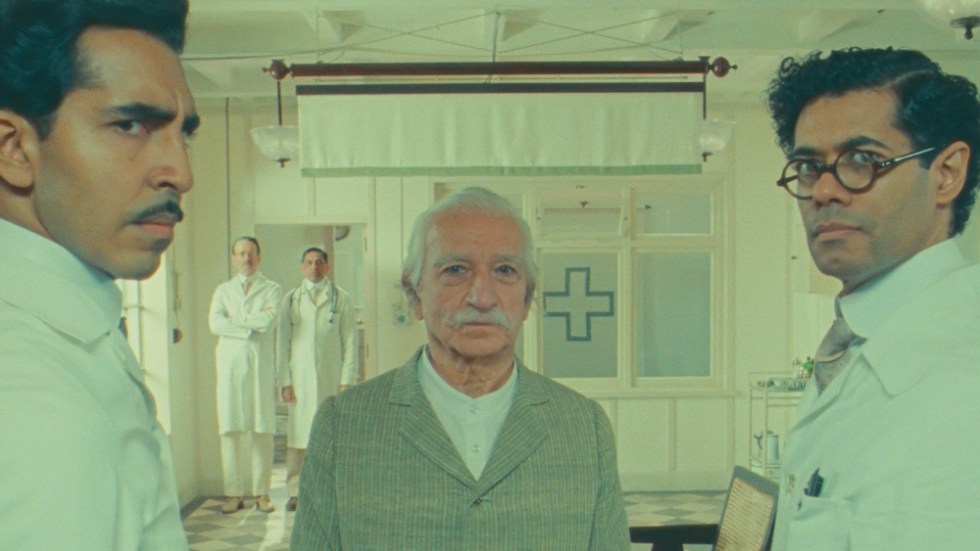
Lastly, Poison is an imaginative and darkly amusing short that reunites the talents of Patel, Cumberbatch, Fiennes, and Kingsley. The story is basic, but the way this tale is told, and the very clever camera work and sound design accompanying it, is extraordinary.
Poison was written by Dahl in January 1950. One of the central characters, Woods, is named after a fellow RAF Squadron 80 pilot killed during the Battle of Athens. As the central anchor to the tale, Woods narrates a strange story involving Harry, a man stuck in bed.
Unfortunately, a poisonous snake (a Krait, no less) has decided to sleep on Harry’s stomach, rendering him powerless to move in case he gets bitten. Given these snakes are infamous for delivering one of the most lethal venoms, it falls to Dr. Ganderbai to come over and find a solution.
The narrative moves quickly, and across the brisk 15-minute run-time, Anderson uses all the tricks in his repertoire to make this a visual spectacle. That familiar theatre-production feel is here in abundance.
During one particularly memorable segment, Woods rushes to the phone, and the camera pans to the right, showing off a new part of the set. As Woods talks to Ganderbai, the sound flickers from the left to the right speakers. Another time, the light changes slightly to spotlight Ganderbai as he takes center stage, rather than previously focusing on Woods and Harry in the background. These moments are just a few that stand out but they highlight the visual prowess of this short.
Poison is arguably the most visually creative of all the short films released in this Roald Dahl collection. The dialogue is snappy, the visual and sound design excellent, and the story is simple but layered, allowing food for thought when the story comes to a close. This one’s another winner.
I give Wes Anderson’s Roald Dahl short films a collective B+.
 TV and City