The season one finale of Daredevil: Born Again was released on April 15. The full season is streaming on Disney+.
By Greg Wheeler
Netflix’s Daredevil is the epitome of how to successfully adapt a comic book. It not only maintained the same tone and feel of the original material, it also kept the themes around religion, faith, and power at the forefront of Matt Murdock’s character.
With 13 episodes to play with, each season became progressively bigger (almost to the detriment of the show’s run) before bowing out with a whimper during the bumper special The Defenders.
Many superhero series have come and gone since Daredevil’s release on Netflix, with long-running titles like The Boys or last year’s lovely surprise The Penguin coming close, but arguably none really hitting the same heights that Daredevil did. In fact, I’d go so far as to call it one of the best superhero shows of all time.
This is a particular problem because when you compare that show to Disney’s rebooted series, Daredevil: Born Again, the differences are night and day. After Disney acquired the rights to Netflix’s slew of superheroes, including Jessica Jones, Luke Cage, and Iron Fist (who we are yet to see), it’s taken a while for the streamer to sink its teeth into this more gritty, grounded side of things.
Sure, Matt Murdock showed up in an episode of She-Hulk, only to be belittled, screwed (literally), and then forced to take a walk of shame, but we’ve never really seen Daredevil in his own story. The same, however, can’t be said for the menacing figure of Kingpin.
After starring in Hawkeye and crying at the end of Echo, Kingpin’s menacing aura has certainly been diminished a fair amount since his first appearance midway through season one of Daredevil.
In many ways, Daredevil: Born Again serves as a spiritual reboot of the Murdock persona, ditching a lot of the Catholicism that makes up his core character and replacing that with, well, nothing. In many ways, this is season four of the original show, given there are a ton of references and returning character cameos designed to hook the original fans back in. The trouble is, much like Matt’s religious angle, the core essence of what made Daredevil so alluring is just gone.
There’s not really a whole lot here for newcomers or diehard fans to really cling to, making it one of those shows that feels confused over who its core audience really is. And that’s a problem. Disney has already greenlit a second season, despite the first struggling to draw people in, with the initial 18-episode first season split conveniently in half. So yes, before we begin, there is a cliffhanger ending that baits for part two, coming in 2026.
The show’s story picks up several years later after the events of Daredevil season three. Foggy is killed (don’t worry, it happens in the first 10 minutes of the show), and Matt, blinded by rage, hangs up the vigilante cape after throwing Bullseye off a rooftop.
Instead, Matt doubles down on becoming the best lawyer he can be, working to try and make the city a better place by putting trust in law enforcement to do what’s right and arrest those who deserve it.
On the other side of the coin is newly reformed Wilson Fisk, who shows back up in town. That poses a big problem because Vanessa has been holding the fort and actually improving Kingpin’s enterprise. She runs a tight ship, apparently better than her husband, and she’s also been having an affair with a guy named Adam because she’s been so lonely.
Well, with Kingpin back, he’s set his sights on trying to make the world a better place and doing so with Vanessa by his side. Fisk is determined to try and walk the straight and narrow path (whether this is due to his spiritual awakening in Echo is unclear), and he casts his eyes on running for mayor. He gets elected quite quickly (again, within the first few episodes) and then sets out to enact a vigilante-free zone around New York.
The basic premise is based on the Born Again comic series, but obviously there’s a good chunk of changes made to accommodate what Disney has to work with here. The pace is deliberately slow, although the rumors about this show having some serious production issues behind the scenes and needing to be rewritten from the ground up can definitely be felt across the show.
There are some wildly inconsistent tonal clashes too. Bizarre comic inclusions to try and lighten the tone never work, like a bank teller showing Matt a Ms. Marvel Funko Pop and joking that he can’t see because he’s blind. There are also nods and references to the original show that only die-hard fans will get, while an ongoing edited-in sequence for “BB’s channel” aims to try and get a pulse on the city with little interviews, but adds nothing to the show. It just feels clumsy and derails the pacing.
The main plotline is fine for the most part, and the general premise of having Kingpin and Daredevil attempt to become different people but finding themselves thrust into their original personas is interesting on paper but lacking in execution.
The show has been absolutely butchered in the editing suite, and in a 10-episode series, it’s crazy how much filler is in this. The antagonists are also completely fumbled, with Muse teased as a big bad and ruined in the span of three episodes, and the end boss of season one ends up being… bad cops.
Along the way, there are bizarre inclusions that contradict Matt’s character, including a guy complaining about being locked up for stealing. What does Matt do? He completely agrees and says (and I quote): “You’re right, it’s not fair that you’re going to jail.” This is the same man, I may add, who is trying to keep criminals off the streets.
Outside of this, the show spends an awful lot of time focused on counseling scenes between Vanessa and Wilson Fisk, who try to repair their marriage and discuss their feelings. And yes, it’s absolutely as riveting as you may expect after spending 10 episodes focused on this angle.
A lot of this stems from the choice to ditch fan-favorites Karen and Foggy and replace them with terrible, two-dimensional supporting characters that have absolutely no depth or character.
Matt’s new girlfriend Heather is by far the worst character here. She spends the entire time henpecking Matt, and toward the end of the show, she goes completely off the rails, making some bizarre decisions that only show her as even more unlikable than she already is.
Kirsten, the new lawyer that Matt’s gone into business with, has absolutely nothing to do here. Honestly, I couldn’t tell you a single thing about her other than that she’s a lawyer. She has no depth, no agency, and absolutely no purpose being in this show.
If that wasn’t bad enough, Fisk is surrounded by a bunch of random suited yes-men and women (not Buck; he’s still a commanding figure), while BB, the annoying journalist, is just kind of… here.
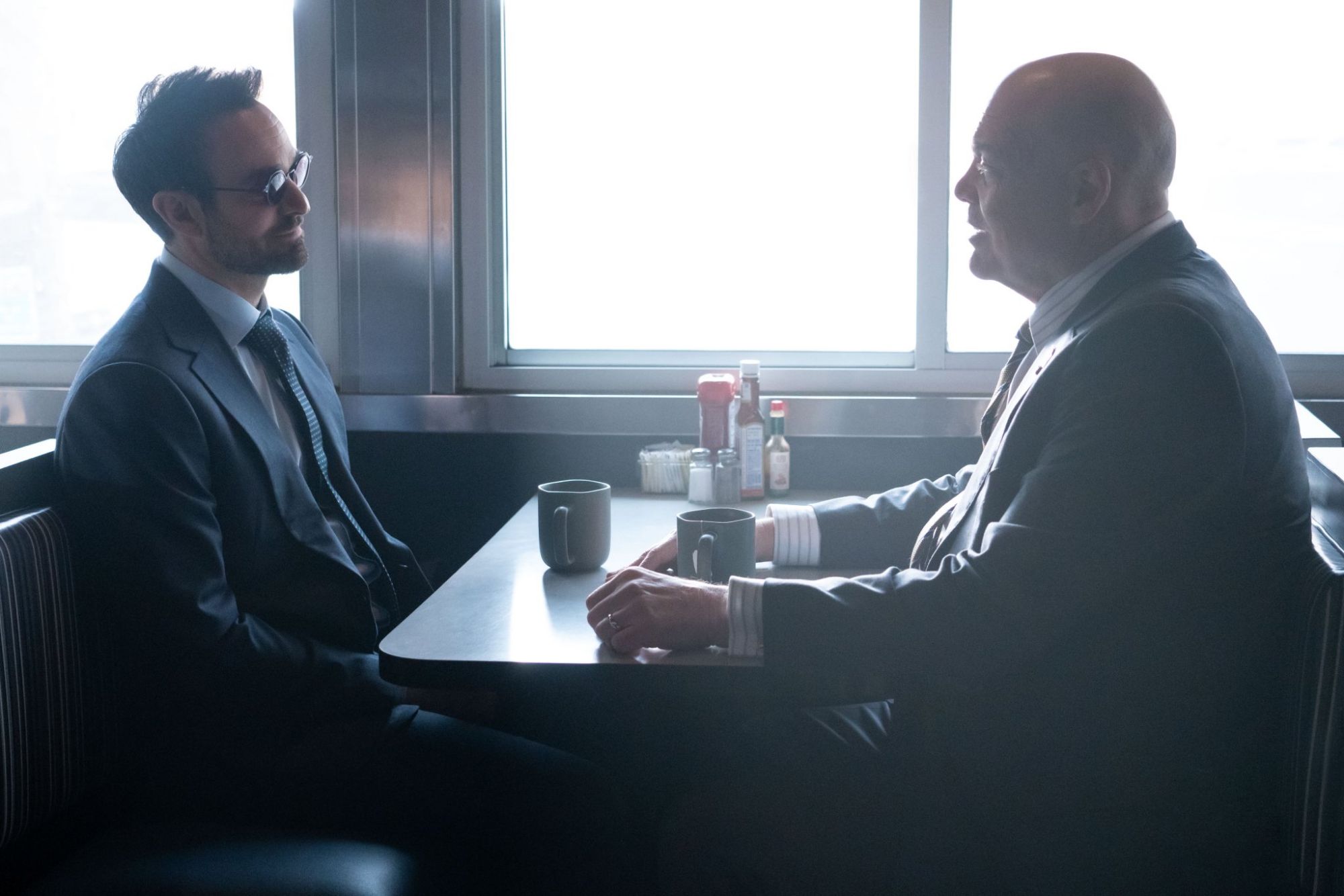
However, the show attempts to emulate the same tone of the original Daredevil series, complete with a moody, atmospheric score, a near-identical opening credits sequence, and, as you might expect, some excellent acting from the leads. At times, though, it does feel like Vincent D’Onofrio is doing a parody of his own Kingpin with the line delivery, but that’s a minor point overall.
In fact, that’s the least of Born Again’s problems. There are a lot of people who are going to like this show, and that’s great. I’m genuinely happy that people have gravitated toward this. But similarly, it also feels like an alien wearing the skin suit of the original Daredevil and trying to pass this off as something similar. Sure, it may look the same, but like that little alien in Men in Black, once you push the face to the side, you see the real messy workings inside.
Just like Matt Murdock himself, Disney has been blindly fumbling for a way to make the MCU tick again. But judging by season one of Born Again, this is definitely not the way to do it.
I give Daredevil: Born Again Season 1 a D.
 TV and City