
Most phonics mistakes are not careless. A child who reads “pen” as “pin” often truly hears no difference between the two. Telling them the right answer fixes one word, but the ear stays the same.
Sound buttons work on the ear itself. A teacher can play two similar sounds side by side until the child notices the gap. Once a child hears the difference, the correction sticks. That turns every mistake into a short lesson instead of a moment of embarrassment.
Why Do Children Keep Making the Same Phonics Mistakes?
Repeated mistakes usually point to a listening gap, not a lack of effort. According to Sound Buttons Lab, a platform that offers free sound buttons to help teachers with pronunciation practice and classroom activities, ‘a mistake a child can hear clearly is a mistake they can fix on their own.’ That idea changes where correction should start. Instead of fixing the word on the page, teachers can first train the ear to hear it correctly.
Many early readers mix up sounds that feel alike in the mouth. Short e and short i are a common pair. So are the sh and ch sounds. If a child cannot separate them by listening, they will keep guessing when reading.
Spoken corrections alone often fade quickly. A teacher says the word once, the child repeats it, and the lesson moves on. Without more chances to hear the difference, the old habit returns by the next page.
How Do Sound Buttons Make Mistakes Easier to Hear?
Sound buttons let a child hear the right sound as many times as needed. Each tap plays the same clear recording, with no change in tone or speed. That consistency helps a child focus on the tiny detail that matters.
Teachers can record two buttons for a tricky pair, such as pin and pen. The child taps one, then the other, and says which word they heard. After a few rounds, the difference that once felt invisible becomes obvious. The child is no longer just being told the answer. They are discovering it with their own ears, which builds both skill and confidence.
What Does Research Say About Feedback That Actually Helps?
Not all correction helps children learn. A major review of feedback research by John Hattie and Helen Timperley found that feedback can strongly affect learning. The same review showed that its impact depends on the type of feedback. Praise alone did little to improve learning, while feedback about the task and how to do it worked far better.
This matters for phonics correction. Saying “good try” feels kind, but it does not show a child what to change. A sound button that plays the correct sound gives clear, task-focused feedback. Pair it with a simple prompt, like listen to the middle sound, and the child knows exactly where to look.
Which Phonics Mistakes Can Sound Buttons Help Fix?
Some mistakes respond especially well to listening practice. They share one thing in common, which is two sounds that a young ear blends together. Start with these four:
Short Vowel Swaps
Words like bag and beg, or pin and pen, differ by one vowel. Record each word on its own button. Let the child tap both and point to the matching picture. Repeating the pair over several days helps the child separate the vowels in their mind.
Dropped Ending Sounds
Some children read cat as ca or dog as do. The last sound slips away because the word feels finished. Play the full word on a button and ask the child to raise a hand when they hear the final sound. This trains attention toward the end of words.
Blend Mix-Ups
Blends like st, bl, and tr pack two sounds close together. Children often drop one, reading stop as sop. A button that plays the blend slowly, then at normal speed, helps them hear both sounds before blending again.
Digraph Confusion
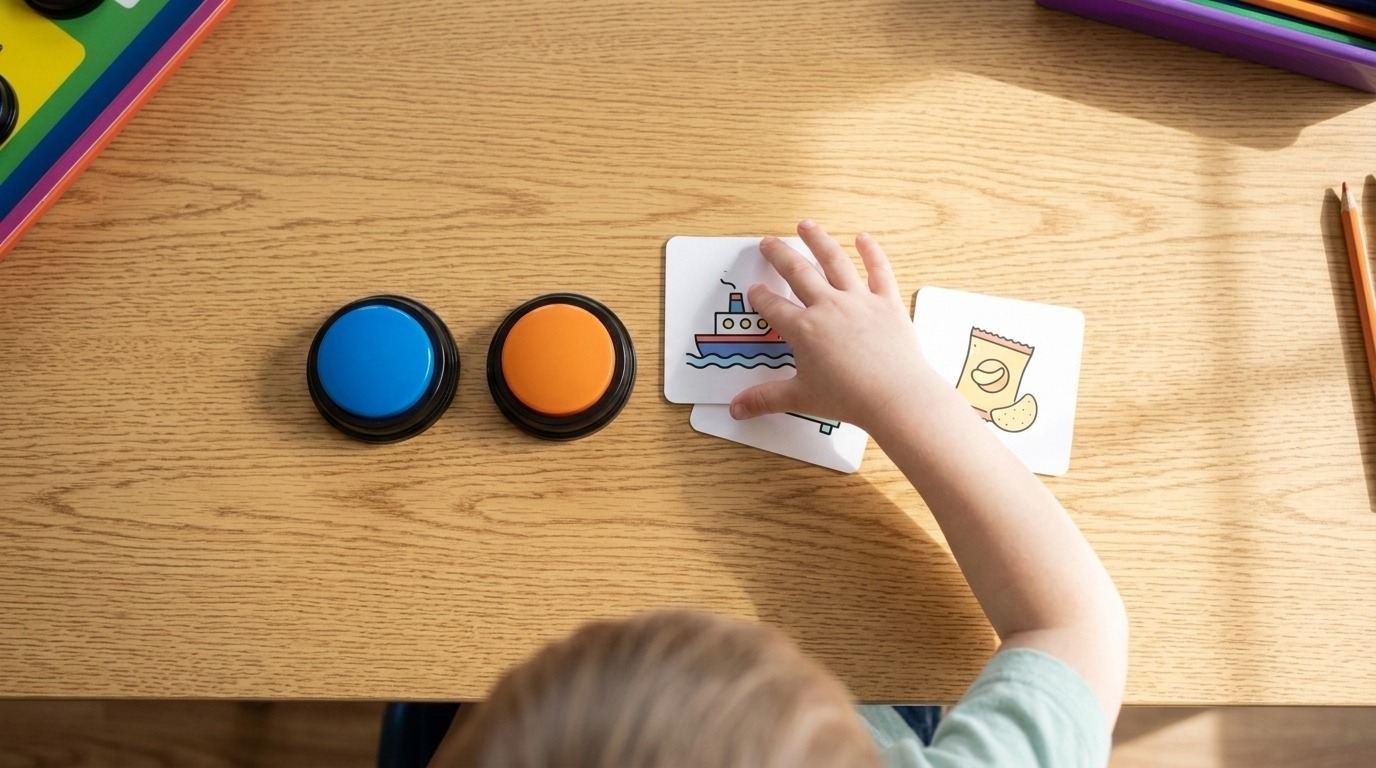
The sh in ship and the ch in chip are easy to mix up. Set up two buttons, one for each sound. Children tap, listen, and sort word cards into the right pile. Sorting turns a quiet correction into a quick game.
How Should Teachers Respond When a Child Makes a Mistake?
The first few seconds after a mistake shape how a child feels about reading. A calm, steady response keeps them willing to try again. A rushed or sharp one can make them stop taking risks.
Start by pausing instead of jumping in with the answer. Some children catch their own error if you give them a moment. If they do not, point to the tricky part of the word and tap the matching sound button. Ask them to listen, then read the word again. When they get it right, play a cheerful sound to mark the success. That small reward links correction with a good feeling, not a bad one.
What Should Teachers Avoid When Correcting Phonics Mistakes?
Good intentions can still slow progress. A few common habits make correction less useful or more stressful for young readers. Try to avoid these:
- Correcting every single error during a read-aloud.
- Using a buzzer or harsh sound for wrong answers.
- Saying the right word before the child has a chance to listen.
- Practicing too many sound pairs in one session.
Focus on one or two patterns at a time instead. Children tend to make steadier progress when each lesson has a clear target. Keep corrections short, friendly, and tied to the sound, and mistakes will start to shrink on their own.